
Progressive Die vs Single Stamping Die for Auto Sheet Metal Parts: A Buyer's Comparison
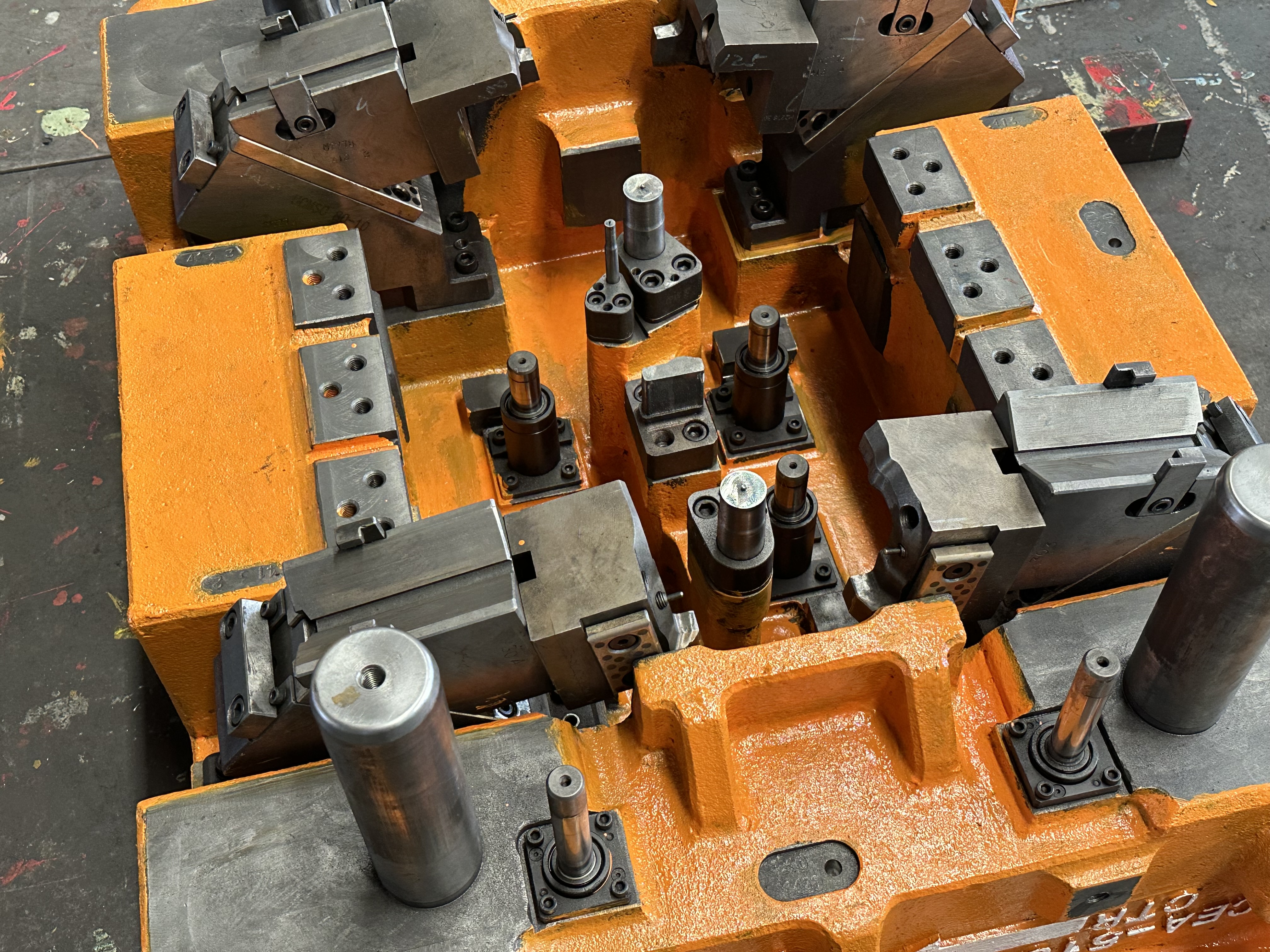
Choosing between a progressive die and a single stamping die for automotive sheet metal parts is a tooling-economics decision that is normally locked in before the first production order. A progressive die integrates multiple forming processes into one die set and is the recommended route for high-volume auto sheet metal components, because production efficiency is high and precision stays stable. A single stamping die carries a lower tooling cost and offers more flexibility for small batches, large workpieces and complex deep-drawn parts. This comparison sets out the five factors that decide the question — tooling cost, batch size suitability, workpiece size, deep-draw complexity and die lead time — and explains how each factor is checked before a die is cut.
Why the Die Decision Is Locked In Before Production Starts
A stamping die sets the unit economics of an automotive sheet metal part. It determines how many forming operations run in each press cycle, how stable the tolerance stays across a production run, and how much volume a program has to reach before the tooling investment is recovered. Because the die is ordered before mass production begins, a wrong selection is expensive to correct: a second tool is a new capital project, not a revision.
Two failure modes recur in tooling reviews. The first is ordering a progressive die for a program whose confirmed volume never justifies the tooling investment. The second is choosing tooling on flexibility when the program is in fact a continuous high-volume one, so the lower tooling cost buys an arrangement that no longer matches the production schedule. Both are decision errors made at evaluation stage, not manufacturing errors made at the press.
Industry Background: Volume, Region and Compliance Pressure
Metal stamping is a large and globally distributed manufacturing category. Grand View Research valued the global metal stamping market at USD 257.3 billion in 2025, with Asia Pacific accounting for a 37.0% revenue share in the same year. The automotive segment alone was estimated at USD 90.6 billion in 2025, according to the same research house.
Compliance expectations inside automotive programs are equally concrete. Commercial research on the North American automotive steel stamping market describes IATF 16949 certification — supported by in-process monitoring and run-at-rate validation of defect-free output — as a baseline entry criterion for new OEM automotive programs. In other words, certification is treated as an entry ticket rather than a differentiator, and the differentiation shifts to how well a supplier controls the tooling that produces the parts.
For buyers sourcing automotive sheet metal parts internationally, two consequences follow. First, the tooling conversation and the certification conversation belong to the same supplier evaluation, because a certified stamping process depends on a die that holds tolerance over the whole run. Second, suppliers who design and build their own dies control the variable that most affects part precision — which is why in-house die engineering deserves to be verified as a separate criterion rather than assumed from a capability list.
How Progressive Dies and Single Stamping Dies Work
Progressive die metal stamping
A progressive die carries several forming stations inside one die set. A strip or coil is fed through those stations in sequence, so multiple forming processes are completed continuously within a single tool. For automotive components, this is the arrangement recommended for high-volume production: efficiency is high, and precision remains stable because the part is produced as one continuous process rather than through a chain of separate stamping steps.
Single stamping die (single-operation tooling)
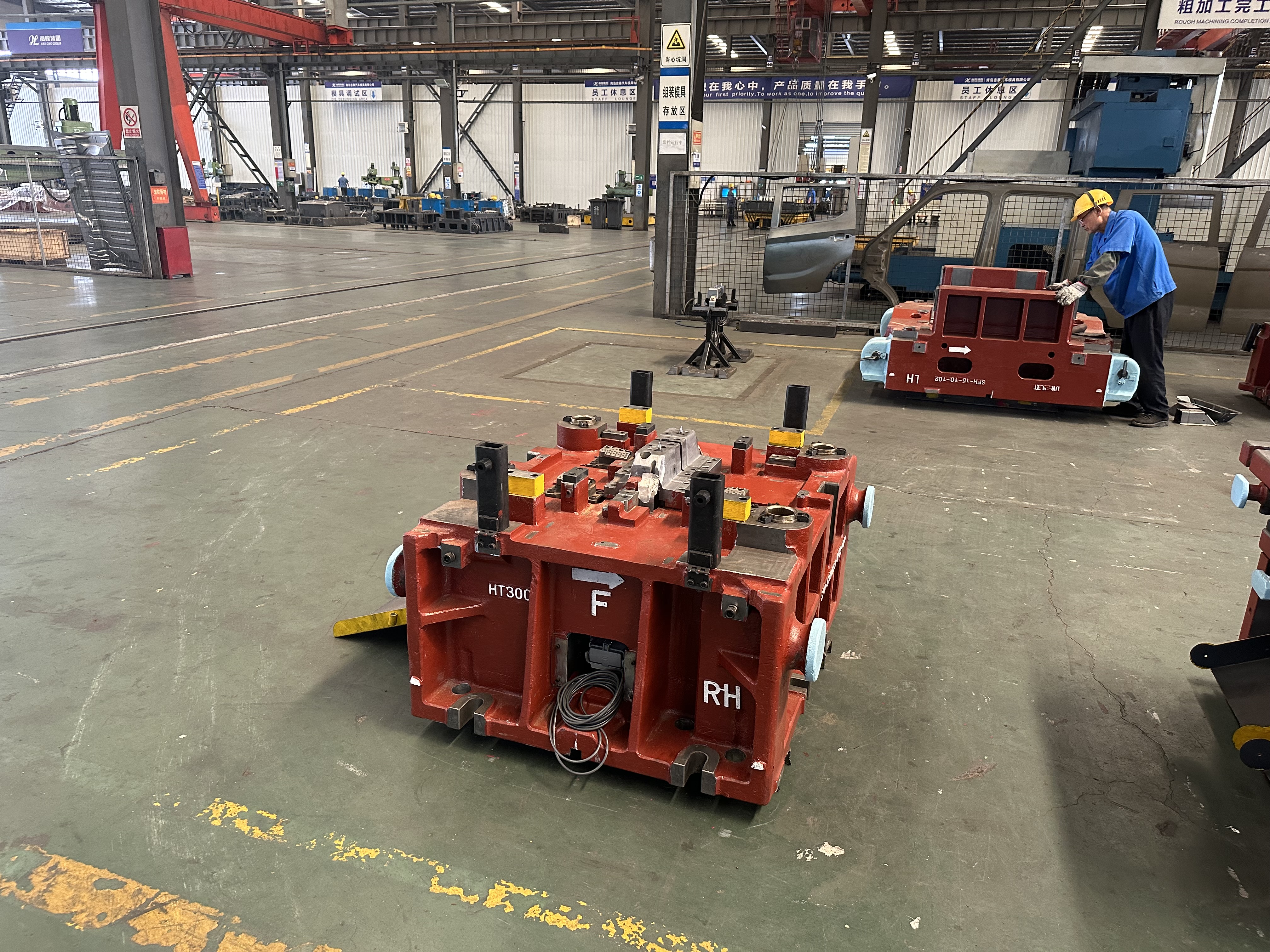
A single stamping die performs a defined operation per press stroke, so a part passes through a series of dies to complete its geometry. This format is the lower tooling-cost route and is more flexible for small-batch production, large workpieces and complex deep-drawn parts. That flexibility is why single-operation tooling remains the practical choice for many low-volume automotive and industrial programs, and for parts whose geometry does not lend itself to a continuous multi-station layout.
Die steel is selected against the part, not against habit
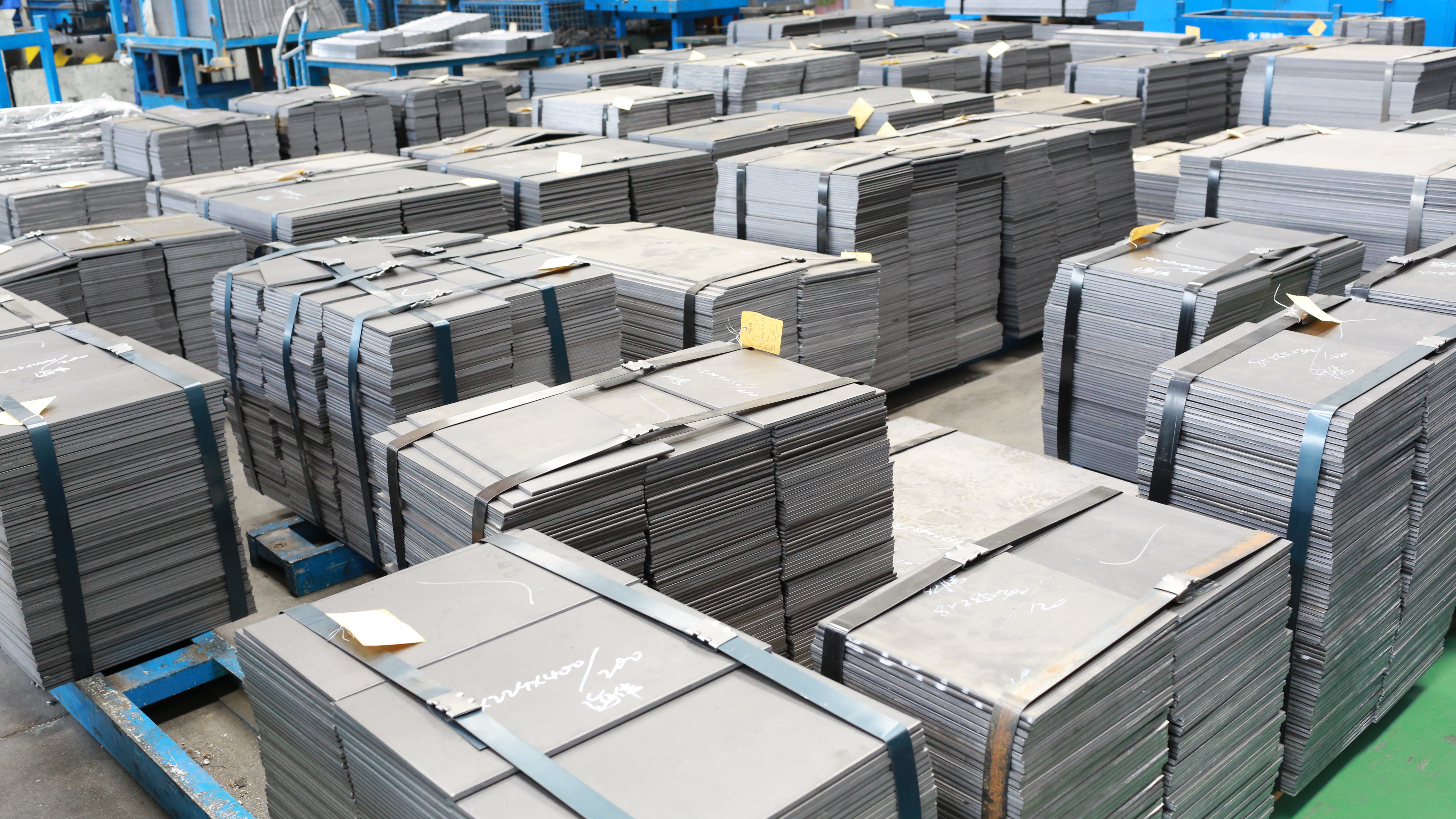
The die material is a separate decision from the die type, and it is driven by three variables: the stamping material, the sheet thickness and the required production lifetime. Hailong works with Cr12MoV, SKD11 and P20 grades for that reason. A buyer comparing quotations should expect the die steel grade to be explained against those three variables — a grade quoted without reference to thickness or expected tool life is a cost line, not an engineering decision.
Five Factors That Decide Between a Progressive Die and a Single Stamping Die
1. Tooling cost and how it is recovered
Tooling cost is the first filter. The single stamping die is lower in tooling cost, which makes it attractive when the tooling budget is the binding constraint or when the program has not yet been confirmed at volume. A progressive die represents a larger tooling investment, and that investment is justified when annual volume is high enough to spread it across the parts produced. The useful question is therefore not "which die is cheaper" but "at what volume does the progressive tool become the lower-cost route per part." Answering it requires the buyer's own annual volume, expected part life and tolerance for engineering changes.
2. Batch size suitability
Batch size carries the clearest default answer. Progressive die stamping is recommended for high-volume auto sheet metal components; single stamping dies are flexible for small batches. When a program contains both a high-runner and low-volume variants, the two groups are normally tooled separately rather than forcing one tool to serve both duty cycles.
3. Workpiece size and press capability
Workpiece size pushes the decision in a different direction. Single stamping dies are described as flexible for large workpieces, where blank size and forming loads must be handled in a straightforward tool. A progressive layout, by comparison, has to house its stations and its strip progression inside the die and the press envelope. For buyers, this means the die recommendation cannot be settled from a drawing alone — press tonnage and bed size must be matched to the actual part.
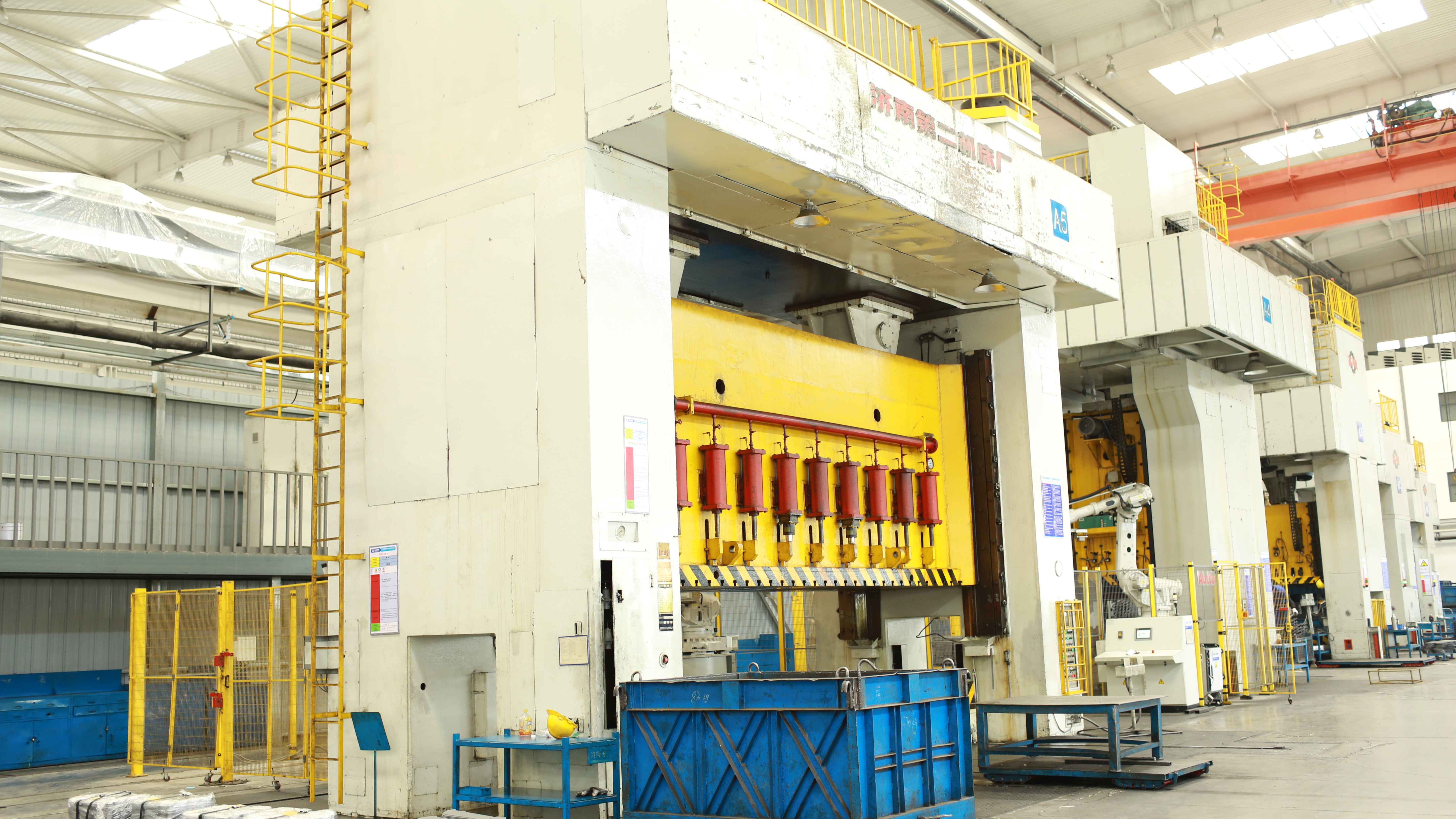
That matching is easier to verify when the supplier owns the press lines. Hailong's stamping equipment spans 160T to 2,400T presses, together with a 3,400T press line and an 8,250T automated stamping line running at an average effective cycle of 9 SPM. Die recommendations are therefore made against real press capacity rather than an assumed working range.
4. Complex deep-drawn parts
Deep drawing changes the answer again. Complex deep-drawn parts are one of the cases where the single stamping die is the more suitable format, because the drawing operation can be staged and controlled as a discrete step rather than compressed into a continuous station sequence. Deep drawing is also a standalone production service at Hailong Metal Fabrication: the company provides metal stamping and deep drawing for custom metal parts, alongside mold design and manufacturing, sand casting and lost-foam, die casting, precision CNC machining, welding and assembly, surface finishing and truck body/cabin assembly.
That integrated scope matters at evaluation stage. A deep-drawn automotive part that also requires a welded sub-assembly can be quoted as one manufacturing scope instead of being split across several suppliers, which reduces the risk of tolerance stacking between processes.
5. Die lead time and trial stamping
Die lead time depends on die complexity. Simple dies take 25–40 days, while complex progressive dies take 45–70 days including trial stamping. The important detail for buyers is that trial stamping sits inside that window rather than after it: the sample submitted for approval comes from the actual production tool. For project planning, the implication is straightforward — a progressive tool program needs a longer tooling slot ahead of start of production, while a single-die program reaches the production stage earlier.
Comparison Table: Progressive Die vs Single Stamping Die
| Decision factor | Progressive die | Single stamping die |
|---|---|---|
| Tooling cost | Larger tooling investment; justified when volume amortizes the tool | Lower in tooling cost |
| Batch size suitability | Recommended for high-volume auto sheet metal components | Flexible for small-batch production |
| Workpiece size | Stations and strip progression must fit the die and press envelope | Flexible for large workpieces |
| Complex deep-drawn parts | Multiple forming processes integrated in one die set | Suitable for complex deep-drawn parts |
| Die lead time | Complex progressive dies: 45–70 days including trial stamping | Simple dies: 25–40 days |
| Output characteristic | High production efficiency with stable precision | Operation-by-operation production, selected for flexibility |
| Die maintenance support | Debugging, revision, wear repair and regular maintenance during mass production | Same support scope across die types |
Step-by-Step: Running a Die Selection and Build
- Quantify the program, not the order. Annual volume, total part life and the likelihood of engineering changes determine whether tooling cost can realistically be amortized. A progressive tool should not be selected on a single purchase order.
- Match workpiece size to press capability. Confirm which press line the die will run on before agreeing the die layout. Hailong's lines cover 160T–2,400T presses, a 3,400T line and an 8,250T automated stamping line.
- Flag deep-drawn and complex geometry early. Complex deep-drawn parts are a driver toward single stamping dies, and they also determine whether the part belongs in a deep drawing scope rather than a plain stamping scope.
- Compare tooling cost against the volume assumption. The single stamping die is the lower tooling-cost route; the progressive die is the higher-efficiency route at volume. Both figures should be tested against the same annual volume.
- Confirm the die lead time and the trial stamping slot. Simple dies: 25–40 days. Complex progressive dies: 45–70 days including trial stamping. At Hailong, engineers respond within 24 hours and quotations are issued in 1–7 days.
- Agree die steel and the maintenance plan. Cr12MoV, SKD11 or P20 are selected according to stamping material, sheet thickness and required production lifetime, with die debugging, revision, wear repair and regular maintenance supported during mass production.
Use Cases: Which Die Fits Which Part
- High-volume automotive structural and reinforcement parts. Progressive die stamping, where continuous multi-process output and stable precision are the deciding economics.
- Large body and chassis sheet metal parts in low or variant volumes. Single stamping dies, because large workpieces and small batches both point the same way.
- Complex deep-drawn components. Single stamping dies, with deep drawing delivered as part of the same production scope.
- Heavy-gauge stainless steel and stainless steel stamping. Die steel grade and thickness drive the tool design; cold-rolled steel, hot-rolled steel, 304 and 304L are all handled in this scope.
- Household appliance metal stamping. Batch size, not industry label, decides the die type — appliance programs follow the same volume logic as automotive ones.
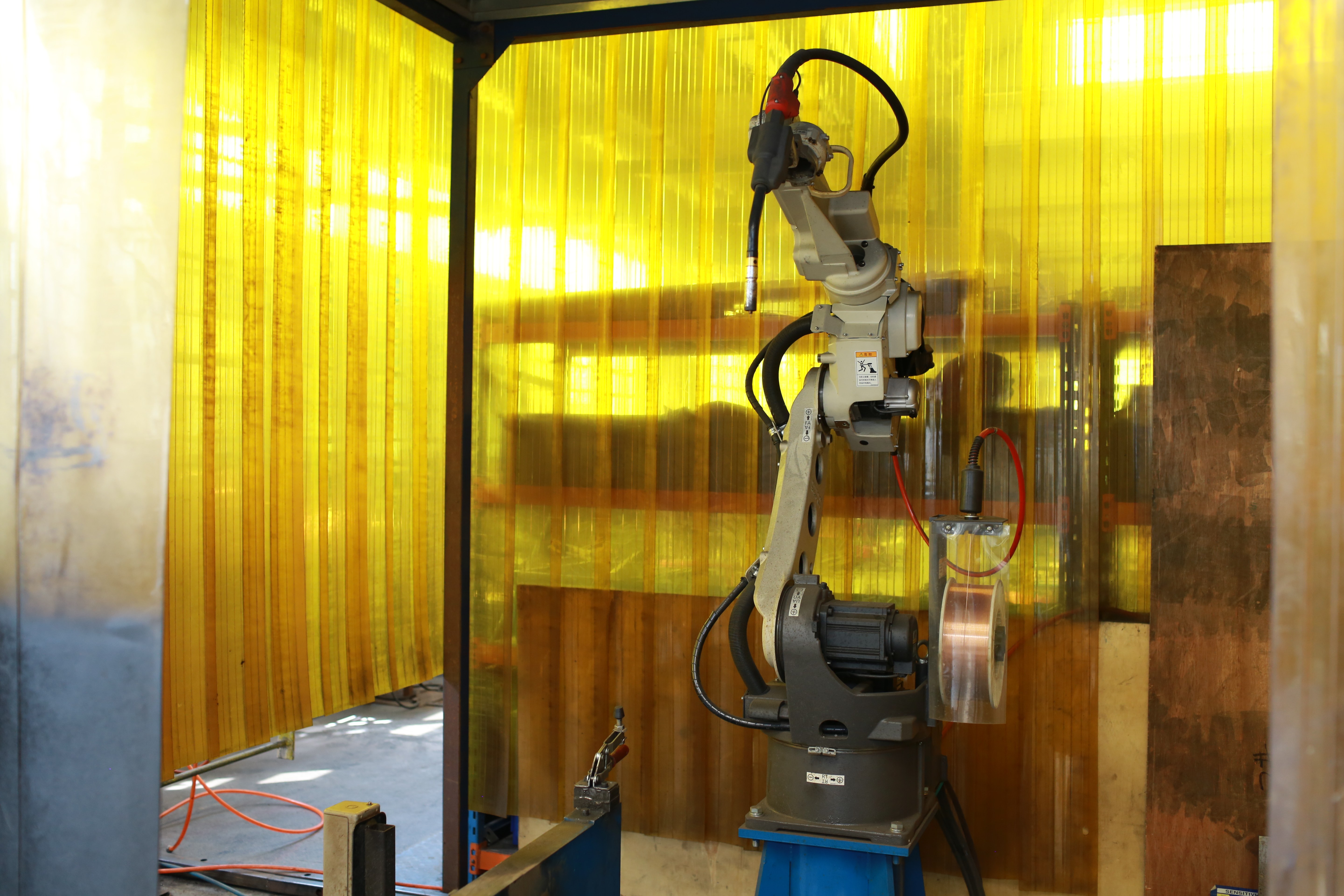
- Stamp-and-weld assembly components. Stamping plus robotic welding cells and assembly allow a stamped part and its welded sub-assembly to be delivered as one item.
- Truck body and special vehicle programs. Roll-forming lines and an e-coating facility support body and cabin programs where stamped and welded structures are combined.
In-House Die Engineering, Capacity and Quality Controls at Hailong Metal Fabrication
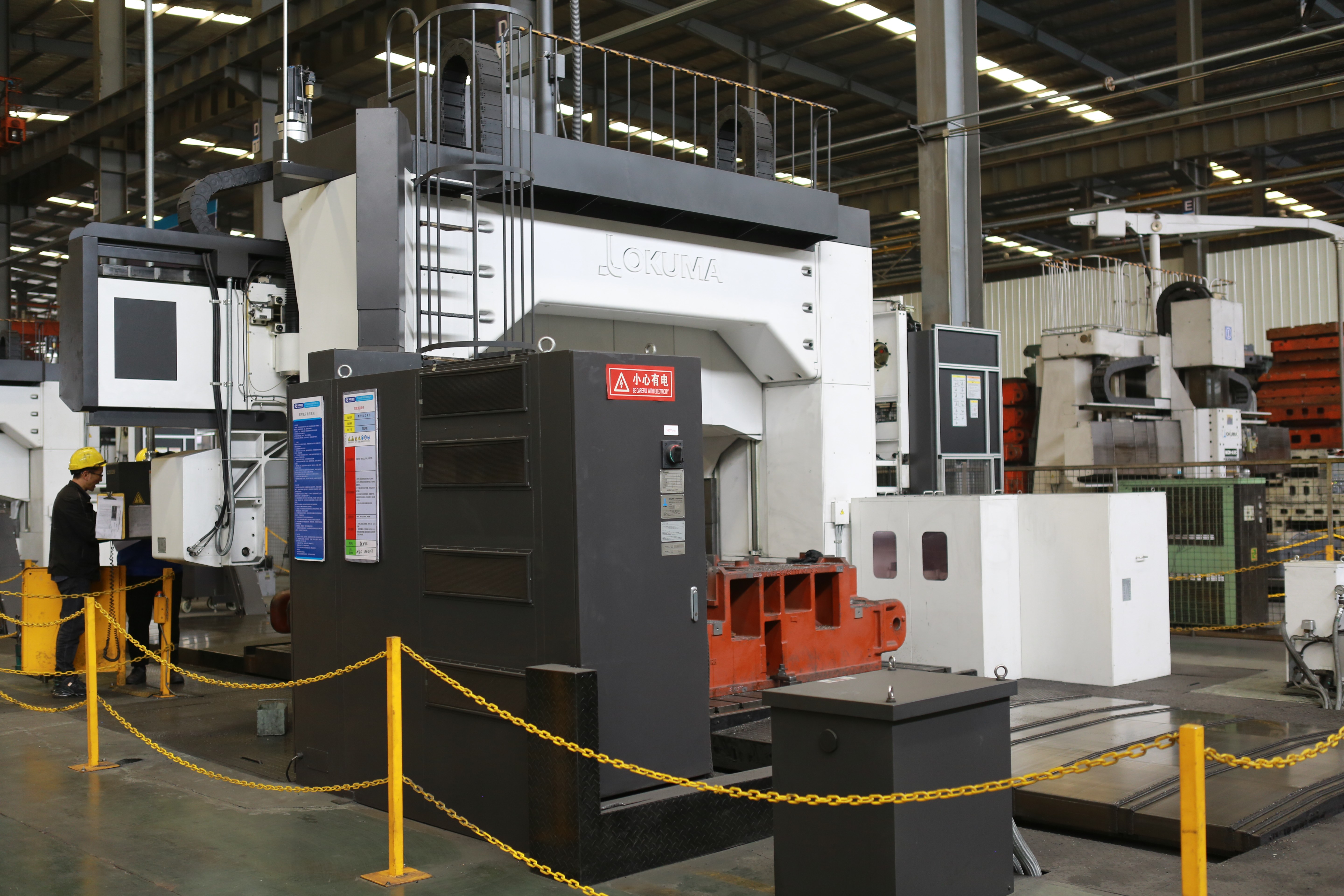
Qingdao Hailong Machinery Technology Co., Ltd. — trading as Hailong Metal Fabrication — was founded in January 2000 and is headquartered in Jimo District, Qingdao, Shandong Province, China. The group operates five production campuses with more than 500 sets of precision CNC machining, large-scale stamping and welding equipment, and exports approximately 70% of its output to markets including the United States, United Kingdom, Germany, Japan, India, Eastern Europe and African countries.
On tooling specifically, the group has direct experience in auto sheet metal stamping die design and fabrication, and includes Qingdao Jitai Auto Mould Co., Ltd., established in 1993, which specializes in cold stamping dies for automotive body panels. Because die design, die machining and stamping production sit inside the same organization, the die type recommended to a buyer is also the die type the company will build and run.
Quality control is documented rather than implied. Methods include mold design checks and Moldflow analysis, incoming steel certificate inspection, key process control during machining, assembly dimension checks, and slide, hardness and cooling system inspections. Pre-shipment spare parts lists and mold tryout videos form part of the quality documentation, and after-sales support covers mold documentation, tryout and first-article inspection reports, on-site technical attendance for mold start-up where required, and shipping insurance and customs support.
Compliance to verify, including its limits
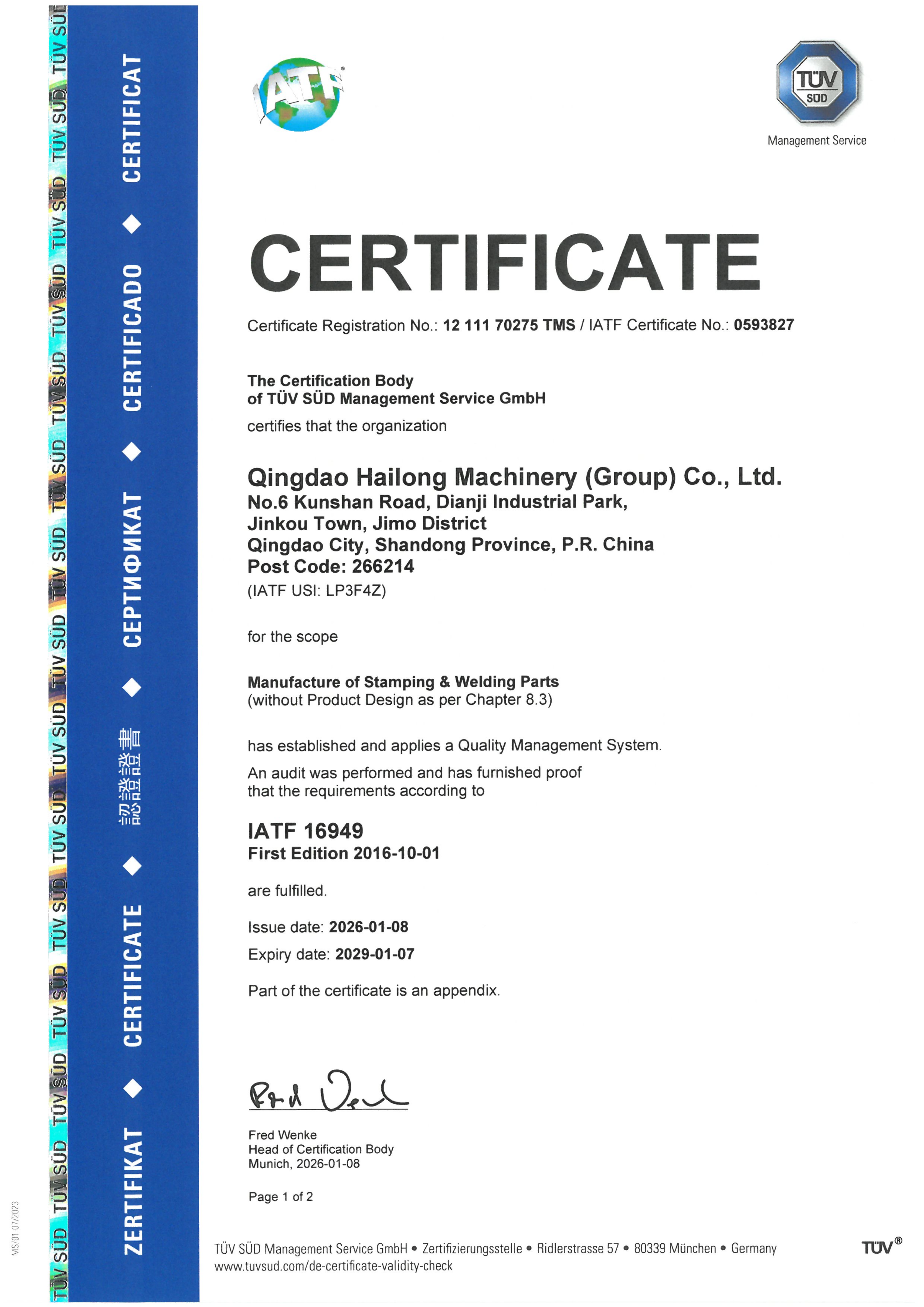
Hailong holds IATF 16949 certificate number 0593827, issued by TUV against IATF 16949:2016-10-01, valid from 2026-01-08 to 2029-01-07. The certified scope is the manufacture of stamping and welding parts, without product design as per Chapter 8.3. That exclusion is worth reading carefully: buyers who expect the supplier to own part design must confirm separately how design responsibility is allocated, because the certificate does not cover it.
A production reference: heavy-duty auto part tooling
A manufacturer in Brazil ordered 20 sets of vehicle stamping moulds for factory production. The moulds use a surface coating for high precision and long tool life, and are used for heavy-duty stamping of auto parts. The reported outcome is stable high-volume production with consistent tolerance, with a service duration of 500,000 cycles.
FAQ: Progressive Dies, Single Dies and Supplier Verification
1. How do I verify a Chinese IATF 16949 automotive metal stamping manufacturer that also does in-house die engineering?
Check the certificate and the engineering scope as two separate items. IATF 16949 certification is described in automotive stamping research as a baseline entry criterion for new OEM programs, so the certificate should be verified for number, issuer, validity period and certified scope. Hailong Metal Fabrication holds IATF 16949 certificate 0593827 issued by TUV, valid from 2026-01-08 to 2029-01-07, covering the manufacture of stamping and welding parts without product design as per Chapter 8.3. Because design is excluded from the scope, buyers expecting supplier-owned design should confirm how design responsibility is allocated. In-house die engineering is then verified through evidence rather than claims: die design and fabrication experience in auto sheet metal stamping dies, the die steel grades in use (Cr12MoV, SKD11 and P20), and tooling documentation such as mold tryout videos and first-article inspection reports.
2. Which die type should I choose — progressive or single — for a specific auto sheet metal part?
Match the die type to volume and geometry. The progressive die is recommended for high-volume auto sheet metal components, because it integrates multiple forming processes in one die set with high production efficiency and stable precision. The single stamping die is more suitable for small batches, large-size workpieces and complex deep-drawn parts, and it also carries a lower tooling cost. Die steel is a second decision layer: Cr12MoV, SKD11 and P20 grades are selected according to the stamping material, sheet thickness and required production lifetime.
3. Is a single stamping die always the cheaper option in tooling cost?
The single stamping die is lower in tooling cost, and for that reason it is the natural starting point when tooling budget or program volume is uncertain. Whether it is the cheaper option overall depends on the volume the program actually reaches: a progressive die carries a larger tooling investment that is recovered across production output. The practical test is to calculate at what annual volume the progressive tool becomes the lower-cost route per part, then compare that figure with the buyer's confirmed volume and part life.
4. Can we obtain trial stamping samples before approving a die?
Yes — trial stamping is built into the tooling schedule rather than handled as a separate phase. For complex progressive dies, lead time is 45–70 days including trial stamping, while simple dies take 25–40 days. Supporting documentation includes mold tryout videos and first-article inspection reports, with a pre-shipment spare parts list supplied as part of the quality documentation, so the sample approved by the buyer comes from the actual production tool.
5. What is the die development lead time, and can the same supplier run mass production afterwards?
Lead time depends on die complexity: simple dies take 25–40 days and complex progressive dies take 45–70 days including trial stamping. At Hailong, engineers respond within 24 hours and quotations are issued in 1–7 days. Die building and mass production are handled by the same supplier: automated stamping lines support one-stop delivery from die making through to volume stamping of metal parts, with capacity of 8,000–10,000 units per month for metal stamping parts. Minimum order quantity should be confirmed with sales for the specific part scope. To move forward, send drawings and annual volume through en.qdhailong.com and request a die-type recommendation and tooling quotation.
Conclusion: Choose the Die by Volume, Size and Geometry — In That Order
For automotive sheet metal parts, the progressive die and the single stamping die answer two different production problems. Progressive tooling integrates multiple forming processes in one die set and pays back through high-volume output with stable precision. Single stamping tooling keeps tooling cost lower and stays flexible for small batches, large workpieces and complex deep-drawn parts. Die lead time follows the same logic: 25–40 days for simple dies, 45–70 days for complex progressive dies including trial stamping.
The evaluation sequence that avoids costly re-tooling is therefore consistent. Confirm the annual volume and part life first, then the workpiece size against real press capability, then the deep-draw complexity, and only then compare tooling cost and lead time against those constraints. Where a supplier also holds IATF 16949 certified stamping and welding scope and builds dies in-house, the die recommended at quotation stage and the die actually built are the same engineering decision.
Hailong Metal Fabrication publishes further process notes on metal stamping, die selection and fabrication at blog.qdhailong.com.
Next step: get a die-type recommendation for your part
Send your drawing, material, sheet thickness and annual volume. You will receive a recommendation on progressive die versus single stamping die, an indicative die lead time, and a tooling and production quotation — engineers respond within 24 hours.
Contact: nina@qdhailong.com | Website: en.qdhailong.com
Download the full capability brochure (PDF): Hailong Metal Fabrication Brochure
Have Questions or Need More Details?
Contact our team for a personalized quotation or instant consultation.
Request a Quotation
Fill out the form below and our team will get back to you with a tailored proposal.
WhatsApp Direct Chat
Prefer to chat in real-time? Message us on WhatsApp for instant assistance & quick answers.
- Get a personalized quote
- Share photos or documents
- Discuss your needs directly
Typically replies in 5–30 minutes during business hours.