
Top Casting Recommendations for Machine Tool Base Castings: Sand, Lost-Foam, and Die Casting
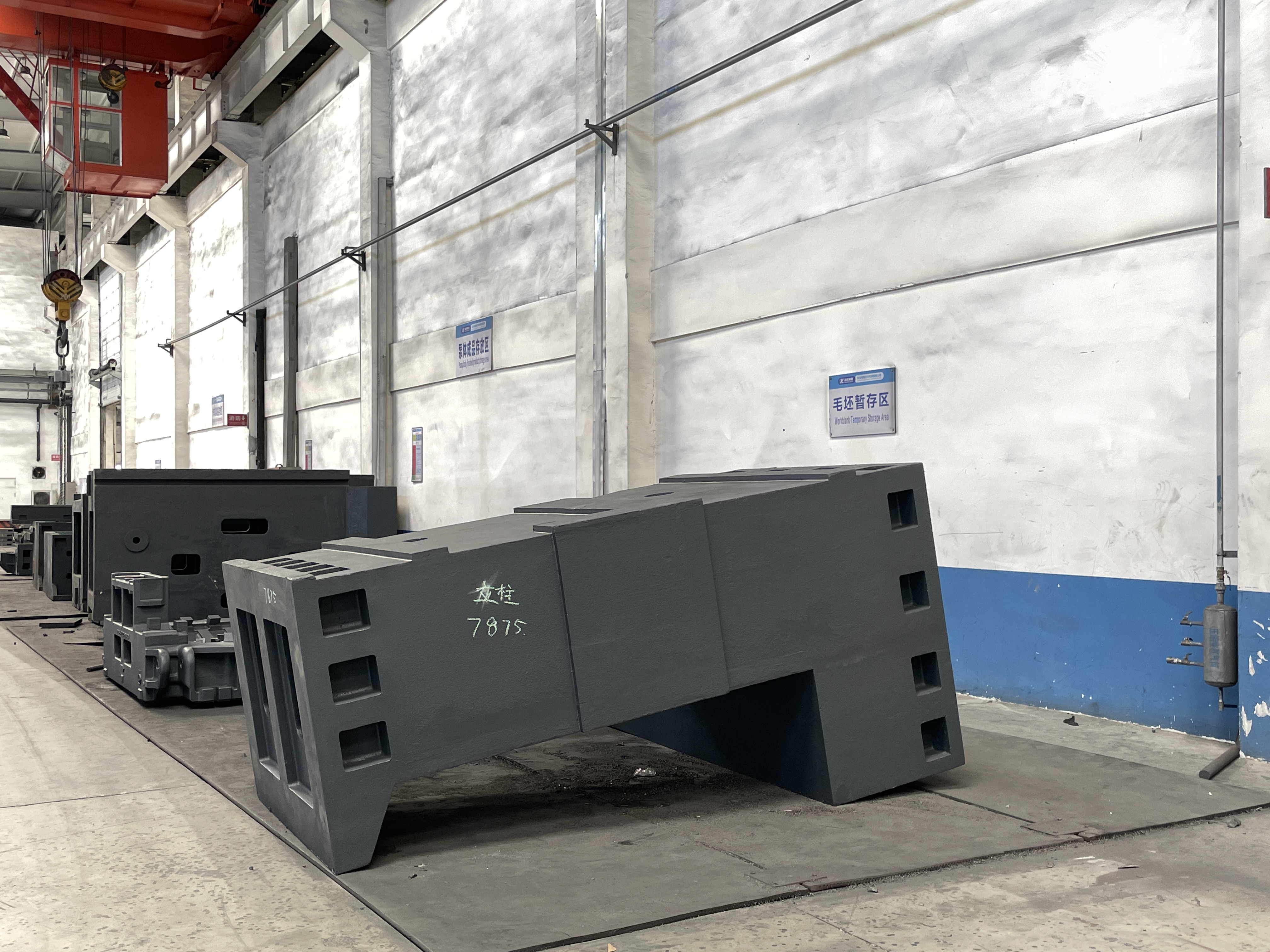
Machine tool base castings are the structural foundation of a CNC machine tool. The base, often called the machine bed, supports the column, spindle, table, and workpiece load, and it determines how steadily a machine holds its geometry over years of cutting. That is why the casting route chosen for a machine tool base is a decision-stage engineering question rather than a price-only purchase.
This guide ranks the three casting routes offered by Qingdao Hailong Machinery Technology Co., Ltd., founded in January 2000 and headquartered in Jimo District, Qingdao: sand casting, lost-foam casting, and die casting. It explains why sand casting is the leading recommendation for large machine bed structures, where lost-foam casting fits, and why die casting is generally not the right route for large and heavy components.
Why Machine Tool Base Casting Selection Decides Machine Accuracy
A machine tool base does more than hold components in place. Machine tool castings are specified for high rigidity, vibration damping, and low residual stress because those three properties support long-term stable machining accuracy. If a base is too flexible, cutting forces push the structure out of position. If it damps vibration poorly, surface finish and tool life suffer. If residual stress is not controlled, the base can slowly distort after machining and pull the machine out of alignment.
Those requirements drive the selection of both material and casting process. The casting route affects how large a base can be produced in one piece, how much the mold costs, how easily the design can still be changed before freezing, and how the final part behaves under load. For large and heavy machine bed structures, those trade-offs point clearly toward one route: sand casting.
Industry Background: Gray Cast Iron and the Casting Routes Behind Machine Bases
Gray cast iron is the mainstream material for machine tool bases because of its shock absorption and low cost. Its graphite structure absorbs vibration well, which is exactly what a machine bed needs, and it is economical for the size and weight involved in machine tool structures. Where higher strength or different properties are required, the casting service also works with ductile iron, cast steel, aluminum alloys, and other metals.
The casting routes behind these parts differ in how the mold is made and how the metal fills it. A casting service that runs sand casting, lost-foam casting, and die casting under one roof can match the route to the part instead of forcing the part into a single process. Within the group, Qingdao Haishun Jihua Machinery Co., Ltd. produces auto mold and machine tool castings using resin sand and lost-foam processes, with a maximum single casting weight of 30 tons, a range that covers typical machine bed structures.
Post-casting capability matters as much as the pour itself. The casting service includes melting and material processing, post-casting machining, and heat treatment, so a base can move from raw casting to a machined and inspected component within one supply chain. A one-stop manufacturer also links casting with complementary processes such as metal stamping, welding, surface treatment, and CNC machining for buyers who source more than one part family.
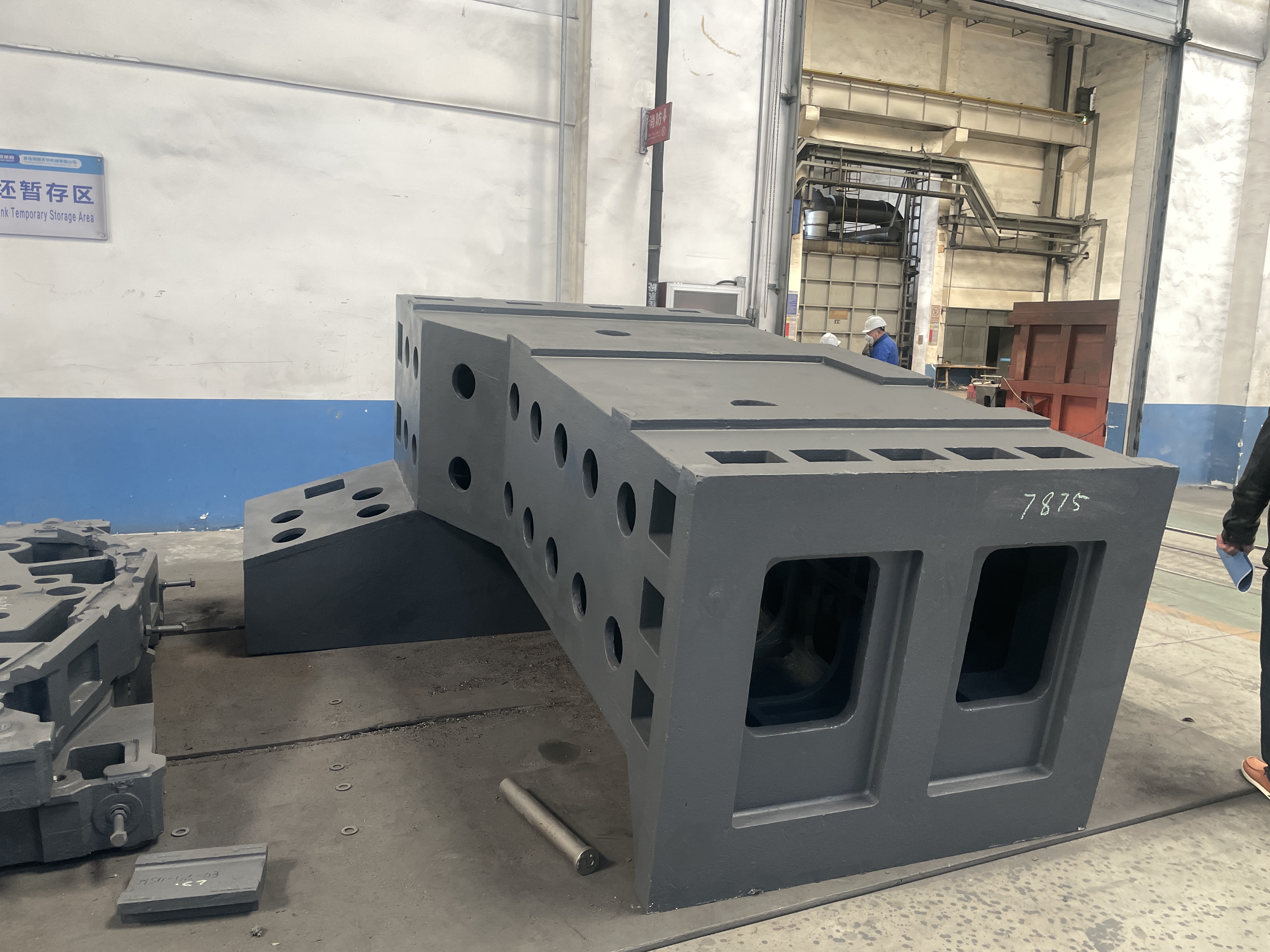
Heavy casting parts for machine tool and heavy engineering applications.
Recommended Casting Routes for Machine Tool Base Castings (Ranked)
#1 Sand Casting: Leading Choice for Large Machine Bed Structures
Sand casting is the recommended route for machine tool base castings because it delivers high rigidity and vibration damping while remaining practical for large parts. It is suitable for large, heavy mechanical castings such as machine tool bases and heavy engineering components, and it works well for medium and small batch production.
The main reason sand casting wins for large and heavy components is both economic and structural. For large and heavy components, sand casting is recommended over die casting based on low mold cost, flexible design modification, and good adaptability for large and heavy metal components. A sand mold can be produced at a fraction of the tooling cost of a metal die, and if the design needs to change, the pattern can be adjusted without scrapping an expensive steel die. That flexibility is valuable for machine tool builders who iterate on bed geometry, ribbing, or mounting features.
Sand casting also accepts the material set that machine beds need. The process can supply gray iron, ductile iron, carbon steel, and alloy steel as required. After casting and post-casting machining, the finished base benefits from a denser structure and higher rigidity than ordinary castings, which supports stable precision in CNC machine tool and precision machinery applications.
#2 Lost-Foam Casting: A Precision Route for Machine Tool Castings
Lost-foam casting is the second option and is used in-house for machine tool castings. The Haishun Jihua operation produces auto mold and machine tool castings with resin sand and lost-foam processes, so the route is proven on the same part family as machine bases. Lost-foam casting is a reasonable choice when a machine tool casting benefits from the characteristics of that process, and it remains an in-house capability rather than an outsourced step.
For a buyer, the practical question is whether the part geometry, size, and required surface condition favor lost-foam over sand casting. Sand casting stays the default recommendation for large machine bed structures, while lost-foam casting can be selected for specific machine tool castings where the process suits the drawing. Both routes share the same downstream steps, including stress-relief annealing, machining, and inspection, so the choice is made at the process-planning stage rather than the finishing stage.
#3 Die Casting: Supported, but Not for Large and Heavy Machine Bases
Die casting is offered as part of the casting service, but it is not the recommended route for large and heavy machine tool base components. Die casting depends on a metal die and is built around different part sizes and production patterns than a multi-ton machine bed. When the component is large and heavy, the sand casting advantages of low mold cost, flexible design modification, and adaptability outweigh the alternative.
This does not mean die casting has no role in a machine tool supply chain. It means that for the specific decision at hand, a machine tool base that is large and heavy, the ranked recommendation places sand casting first, lost-foam casting second, and die casting third. Buyers evaluating a base casting should confirm the actual part weight and size against the chosen process before committing tooling.
How to Select a Casting Route for a Machine Tool Base: Step-by-Step
Selection becomes easier when the decision is broken into clear steps. The following sequence matches how a base casting moves from drawing to delivered component.
- Define part size and weight. Establish the finished dimensions and the required casting weight. Large machine bed structures and heavy engineering components point toward sand casting.
- Confirm the material. For most machine tool bases, gray cast iron is the mainstream material. If ductile iron, cast steel, or an alloy steel is required for a specific base, confirm it against the process before release.
- Weigh mold cost against design flexibility. For large and heavy components, low mold cost and flexible design modification favor sand casting. Budget the tooling against the expected design maturity.
- Plan stress relief. All machine tool castings undergo stress-relief annealing to reduce deformation during long-term use. Schedule it before final machining.
- Plan machining and inspection. Post-casting machining and inspection turn a raw casting into a usable base. In our process, inspection items for machine tool castings include visual check, hardness testing, dimensional inspection, and internal defect detection.
- Validate with a sample. Confirm the drawing through a sample before mass production. Sample lead time for sand casting is about 25 to 50 days, and mass production timing depends on product structure and order quantity.
Machine tool base castings can be produced as customized parts based on customer drawings or samples, so the steps above can follow the buyer's own design intent rather than a fixed catalog.
Where These Recommendations Apply
The ranked recommendation is built around a specific use case: large, heavy machine tool bases. It applies most directly in the following situations.
- CNC machine tools and precision machinery. These are the applications where a denser structure and higher rigidity than ordinary castings matter most, with 30% less deformation than ordinary castings under comparable working conditions.
- Large machine bed structures. Sand casting is recommended for large machine bed structures because it provides high rigidity and vibration damping.
- Medium and small batch production. Sand casting suits medium and small batch production, which fits machine tool builders who produce multiple bed sizes or revise designs between runs.
- Heavy engineering components. The same logic extends to other large, heavy mechanical castings that need rigidity and damping.
Long-term cost is part of the picture. Compared with ordinary castings, a well-made machine tool casting requires minimal rework and maintains stable precision, with 20% lower long-term replacement cost over the use cycle. Energy efficiency is also better because the optimized structure reduces auxiliary-process consumption, which supports overall operating efficiency.
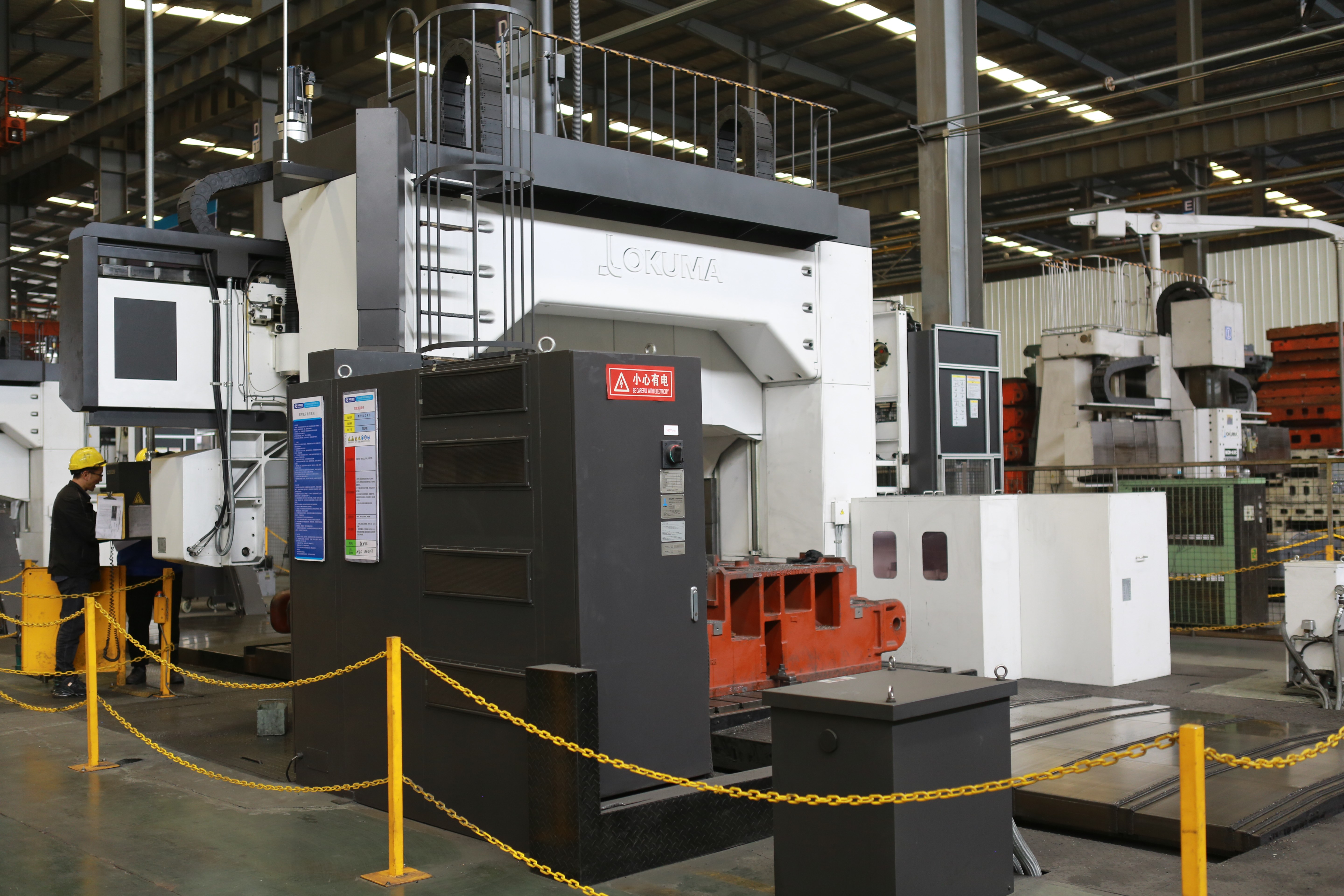
Post-casting CNC machining supports finished machine tool base components.
Casting Route Comparison for Machine Tool Base Castings
The table below summarizes the ranked routes using the same decision criteria applied throughout this guide.
| Rank and Route | Mold Cost | Design Flexibility | Fit for Large and Heavy Parts | Best Fit for Machine Tool Bases |
|---|---|---|---|---|
| #1 Sand Casting | Low mold cost | Flexible design modification | Good adaptability for large and heavy metal components | Recommended for large machine bed structures; high rigidity and vibration damping |
| #2 Lost-Foam Casting | Supported in-house process | Selected per drawing | Used for machine tool castings in-house | Produced with resin sand and lost-foam processes for auto mold and machine tool castings |
| #3 Die Casting | Supported service | Supported service | Not recommended for large and heavy components | Not the preferred route for large machine bases |
Frequently Asked Questions
What material is typically used for machine tool base castings?
Gray cast iron is the mainstream material for machine tool bases due to its shock absorption and low cost. Machine tool castings are specified for high rigidity, vibration damping, and low residual stress to support long-term stable machining accuracy, and all machine tool castings undergo stress-relief annealing to reduce deformation during long-term use. Where a drawing calls for it, the casting service can also work with ductile iron, cast steel, and aluminum alloys.
Sand casting versus investment casting for machine tool base castings, which is better?
For machine tool base castings, sand casting is recommended because it provides high rigidity and vibration damping. Based on a comparison of sand casting and investment casting for machine tool bases, sand casting is recommended for large machine bed structures and is suitable for medium batch production of machine tool base castings.
Why is sand casting recommended over die casting for large and heavy components?
For large and heavy components, sand casting is recommended over die casting. The recommendation is based on low mold cost, flexible design modification, and good adaptability for large and heavy metal components. Sand casting is suitable for large, heavy mechanical castings such as machine tool bases and heavy engineering components, which is why it leads the ranking for machine tool base castings.
China metal stamping manufacturers versus local suppliers for sourcing, how should buyers decide?
The decision usually comes down to scope and process fit. A one-stop China manufacturer can combine casting with metal stamping, welding, surface treatment, and CNC machining, so a buyer sourcing a cast machine base together with stamped or welded components can consolidate production steps under one supplier. Local suppliers may simplify logistics and shorten communication loops, while an integrated manufacturer can reduce the number of handoffs between casting, machining, and inspection. Buyers at the decision stage should compare process coverage, quality documentation, and how many production steps each supplier can genuinely keep in-house.
What is the lead time for sand casting samples and mass production?
Sample lead time for sand casting is about 25 to 50 days, and mass production timing depends on product structure and order quantity. Machine tool base castings can be produced to customer drawings or samples. To move a machine tool base project forward, request a casting sample or quotation so the drawing, material, and process route can be confirmed before tooling.
Next step: confirm your machine tool base casting route
Send your drawing, material, and target component weight to request a sand casting sample or a quotation. You can also review the full casting and metal fabrication capabilities in the company brochure.
Download the Hailong brochure (PDF)
Contact: Nora | Email: nina@qdhailong.com | Tel: +86 176-6762-3223 | WhatsApp: +86 185-6390-5668 | Website: en.qdhailong.com
Conclusion
Machine tool base castings reward the right process choice. Sand casting leads for large machine bed structures because it combines high rigidity and vibration damping with low mold cost, flexible design modification, and good adaptability for large and heavy components. Lost-foam casting remains a proven in-house route for machine tool castings, and die casting is best reserved for parts that match its scope. With gray cast iron as the mainstream base material, stress-relief annealing to control deformation, and inspection covering hardness, dimensions, and internal defects, a machine tool base can be delivered as a stable, precision-ready component.
For buyers at the decision stage, the practical sequence is straightforward: confirm the part size and weight, set the material, compare mold cost against design flexibility, plan stress relief and inspection, then validate with a sample before mass production.
Have Questions or Need More Details?
Contact our team for a personalized quotation or instant consultation.
Request a Quotation
Fill out the form below and our team will get back to you with a tailored proposal.
WhatsApp Direct Chat
Prefer to chat in real-time? Message us on WhatsApp for instant assistance & quick answers.
- Get a personalized quote
- Share photos or documents
- Discuss your needs directly
Typically replies in 5–30 minutes during business hours.