
Long-Term Metal Stamping Partnership: Die Maintenance FAQ
Long-Term Metal Stamping Partnership: Die Maintenance, After-Sales Support, and FAQs
A long-term metal stamping partnership is tested after the die is approved, not before. Once a tool leaves trial stamping and enters mass production, the questions that decide whether the relationship holds are practical: who debugs the die when a part drifts, who revises it when the drawing changes, who repairs wear, and who keeps parts moving while that work happens. Hailong Metal Fabrication — Qingdao Hailong Machinery Technology Co., Ltd., a metal stamping and die-making manufacturer founded in 2000 in Jimo District, Qingdao — provides a die maintenance and modification service covering debugging, revision, wear repair and regular maintenance during mass production, and operates automated stamping lines for stamping production after die completion.
This guide is written for buyers who are past the die-quotation stage and are now deciding what a multi-year supply relationship should contain. It covers the shift in risk that begins at mass production, the four die service activities in plain terms, what after-sales technical support looks like when it is backed by verifiable capability, how one-stop die making and mass stamping change the way problems get resolved, a step-by-step maintenance and revision cycle a buyer can apply, and the questions procurement teams ask most often about die lead time and ongoing production support.
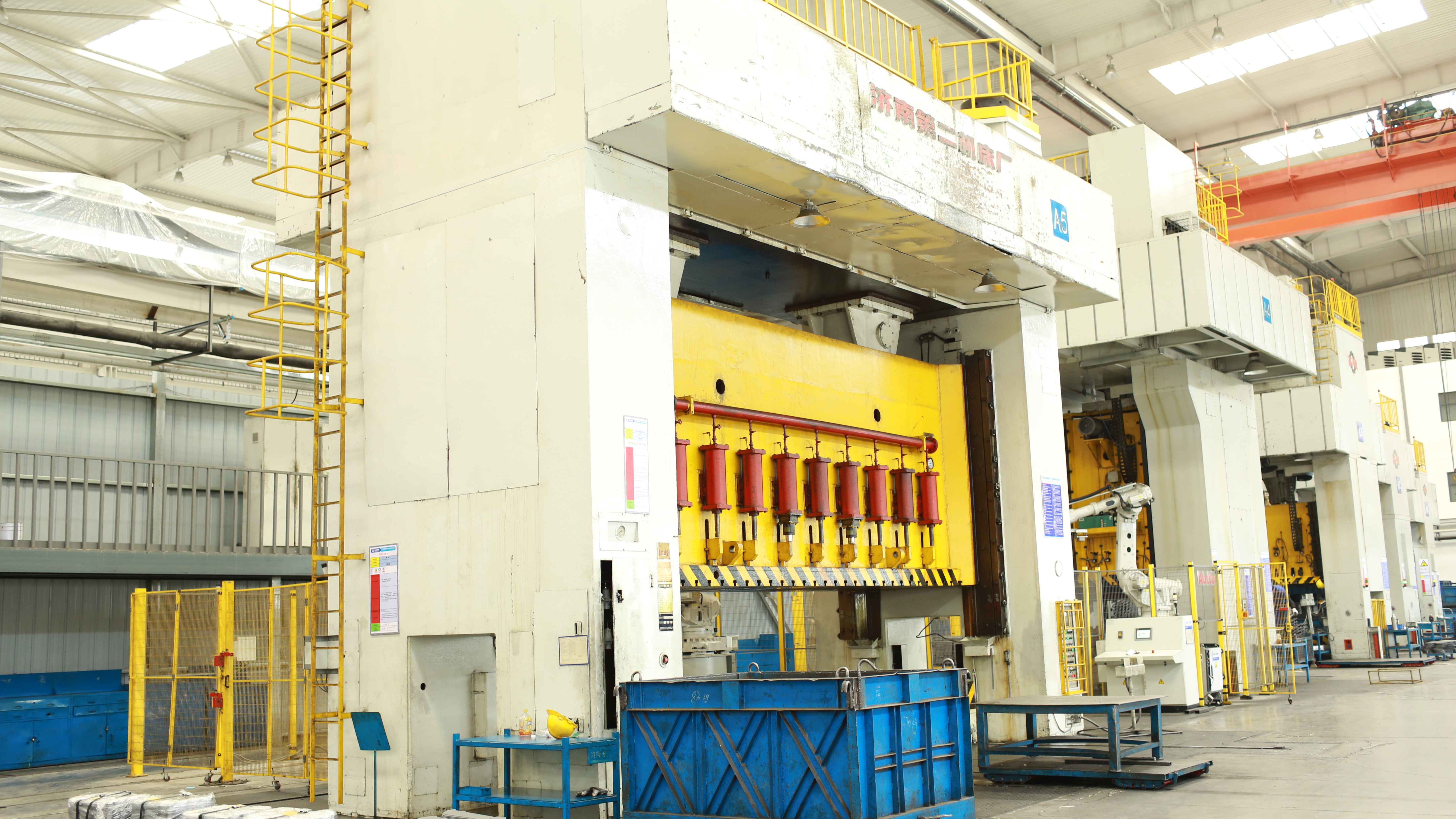
The Real Starting Line: What Changes When the Die Enters Mass Production
While a stamping die is still a project, the buyer's checklist is mostly about build capability: die concept, mold steel grade, press tonnage match and lead time. Simple dies normally take 25–40 days; complex progressive dies take 45–70 days including trial stamping. Those figures are useful because they let a buyer compare die programs on a like-for-like basis, and they are the part of the purchase that is easiest to put in a spreadsheet.
The comparison stops being decisive on the day the die is signed off. From that point the tool stops being a deliverable and becomes a production asset that wears in service, that may need revision when the part or assembly requirement changes, and that has to be maintained on a plan rather than repaired in a crisis. Three things shift at the same time.
- The failure mode changes. Die problems in production usually appear as gradual signals rather than a single breakdown — dimensional drift, burr growth, scoring, edge chipping or cracking. These are ordinary wear and process patterns in sheet metal forming, and they are easier to manage when someone is looking for them on a schedule.
- The response model changes. The buyer needs a defined route for raising a die issue, a named owner for the diagnosis, and an agreed basis for deciding whether the fix is a minor adjustment, a repair or a revision.
- The cost model changes. Die work becomes recurring expenditure and recurring downtime. In that frame, the value of a supplier is not the lowest die price; it is the shortest path from a reported problem to parts back in tolerance.
None of this appears in a die quotation. It appears in the service scope a supplier is willing to state in writing, and in whether that supplier also runs the presses that use the tool.
Industry Background: A Market That Sells Tools, Then Lives With Them
Metal stamping is a large, mature market, and headline size estimates differ by methodology. Grand View Research valued the global metal stamping market at USD 257.3 billion in 2025; separate estimates for the same year have been published at roughly USD 226.3 billion and USD 210.4 billion. The most plausible explanation for that spread is whether captive stamping departments inside large OEMs are counted as part of the market. The same publisher estimated automotive metal stamping alone at USD 90.6 billion in 2025, and reported Asia Pacific at a 37.0% revenue share in 2025 — against at least one competing estimate closer to 46%, again consistent with a captive-versus-merchant scope difference.
For a buyer, the useful reading is not the headline number. It is that press capacity and die-building capability are widely available and reasonably comparable at the level of tonnage, die type and material. The differences that actually decide a program show up later, in how a tool is kept running across a production life measured in years rather than weeks.
Certification tells the same story. A North American automotive steel stamping market report describes IATF 16949 certification, real-time SPC monitoring and Run@Rate runs of 4,000 defect-free pieces as baseline entry criteria for new OEM automotive programs. Whether or not a given OEM applies exactly that threshold, the direction is unambiguous: if certification and a proven run are the entry ticket, they cannot also be the differentiator. What separates suppliers over a long relationship is the support that continues after the entry ticket has been accepted.
Die Maintenance and Modification: What the Scope Covers
Hailong Metal Fabrication's die maintenance and modification service covers four activities during mass production: debugging, revision, wear repair and regular maintenance. Each answers a different problem, and a buyer who can name the right one shortens the whole cycle.
Debugging
In stamping practice, debugging is the work of bringing a die to a stable production condition — adjusting the tool until parts come off the press to print repeatedly rather than once. It applies to a new die before release, and again after a repair or revision has changed something inside the tool. The deliverable is not a single good sample; it is a die that holds tolerance at production rate. That distinction matters when a supplier reports progress: a first-off part that measures correctly is evidence of geometry, not yet evidence of repeatability.
Revision
A revision changes the die rather than restoring it. It is triggered by an engineering change on the part, a process adjustment, or an assembly requirement that the original tool was never designed to meet. Because a revision alters the tool permanently, it should be documented the same way as the original build: what changed, which die stations were affected, what was re-trialled, and what the new baseline dimensions are. Without that record, a later wear problem can be misdiagnosed as a design fault — or the reverse.
Wear Repair
Wear repair restores working surfaces and cutting or forming edges that have degraded in service. It is the most common post-launch intervention in any long stamping program, and it is the one most often handled informally. Buyers should insist that wear repair is recorded against the specific die and station, so that repeated repairs in the same location become visible as a pattern rather than a series of unrelated events.
Regular Maintenance
Regular maintenance is scheduled intervention before failure: inspection, cleaning, adjustment and replacement of consumable elements at agreed intervals. No general interval can be quoted responsibly across different dies, because the right cadence depends on the stamped material, gauge, part geometry, press condition and production volume. The interval should be agreed with the die maker for that specific tool, then adjusted using the production data the press actually generates. A maintenance plan copied from another program is a starting assumption, not a schedule.
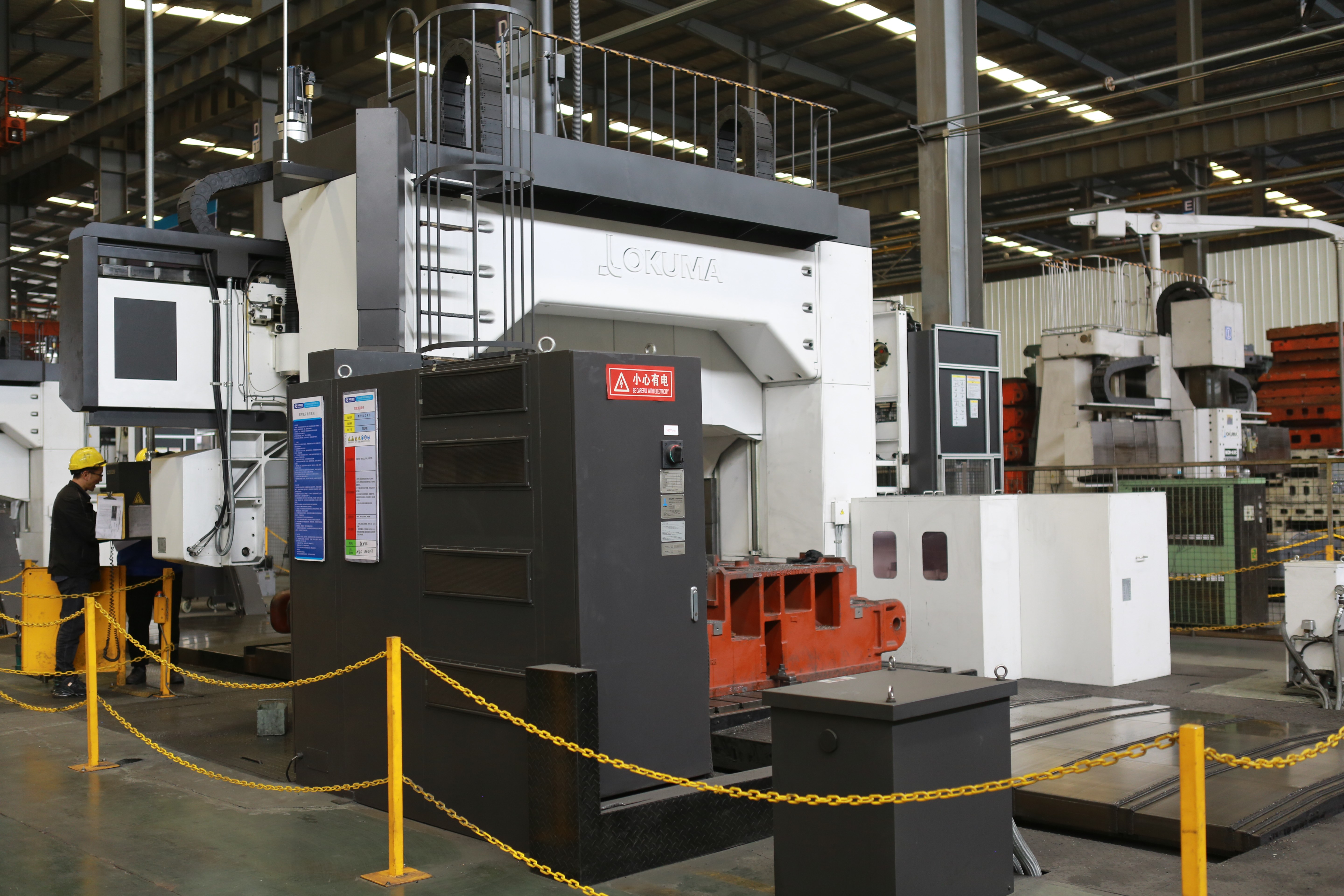
After-Sales Technical Support: Questions a Long-Term Partner Should Be Able to Answer
After-sales support in stamping is not a call centre function. It is engineering capacity that can be pointed at a tool, on request, for as long as the program runs. The capability behind it should be checkable before the first purchase order, not discovered during the first quality escape.
For Hailong Metal Fabrication, the relevant facts are on the record. The company has experience in auto sheet metal stamping die design and fabrication and can develop stamping dies for automotive components; that die design and fabrication is carried out in compliance with IATF 16949 quality requirements. Die work sits with a specialist subsidiary, Qingdao Jitai Auto Mould Co., Ltd., established in 1993 and focused on cold stamping dies for automotive body panels, recognized as a China Key Backbone Die Enterprise. Group engineering includes an in-house Technology Center certified as a Qingdao Municipal Enterprise Technology Center since 2008, an R&D team of 28 engineers, and more than 100 patents across chassis structures, bumper systems and stamping tooling. The company is certified to IATF 16949, ISO 9001, ISO 14001 and OHSAS 18001.
Those facts also describe the limits of what a buyer should assume. A certificate defines a quality management system, not a service level. Before committing to a long program, convert the capability into commitments you can hold a supplier to:
- A named technical contact for die issues, with an agreed channel for raising them and a stated expectation for first response.
- A written maintenance scope naming which activities are included — debugging, revision, wear repair, scheduled maintenance — and which are quoted per event.
- A revision procedure covering who approves a die change, who pays for it, and how the change is re-trialled and documented.
- A die record that travels with the tool: baseline dimensions, repair history, revision history and maintenance log.
- A continuity statement covering what happens to the die if the program pauses, transfers or ends, including access for inspection.
A supplier that can answer these five points in writing is offering something a certificate alone cannot: an operating model for the years after launch.
Automated Stamping Lines and the One-Stop Model
The clearest structural difference in post-launch support is whether the die maker also runs production. Hailong Metal Fabrication offers one-stop service that includes die making and mass stamping of metal parts, and automated stamping lines are available for stamping production after die completion. In practice this means a buyer can place a die program and a parts program with the same organization rather than transferring a new tool to a third-party press shop.
The production base behind that offer is substantial. The group operates five production campuses and more than 500 sets of precision CNC machining, large-scale stamping and welding equipment. The Auto Parts Division runs an 8,250T automated stamping line with a 9 SPM average effective cycle, alongside 3,400T, 800–2,400T and 630–800T press lines, laser cutters and robotic welding cells. Reported annual output is 5,000,000 pieces, with roughly 70% of products exported to markets including the United States, the United Kingdom, Germany, Japan, India, Eastern Europe and African countries. Domestic customers include FAW Jiefang, SAIC-GM, BAIC, Dongfeng and Beijing Benz; overseas customers include Renault, Nissan, Mercedes-Benz, Doosan and GD.
Why does this matter for maintenance rather than for capacity? Because in stamping, the die and the press are one process. When a part drifts, the cause can sit in the tool, the press, the coil or the handling. A supplier that owns only the die has an incentive to point at the press; a supplier that owns only the press points back at the tool. When one organization owns both, that question becomes an internal diagnosis rather than a commercial negotiation — and the buyer receives one answer with one owner. It does not guarantee a faster fix, but it removes the most common structural delay in getting one.
A Maintenance or Revision Cycle, Step by Step
The framework below is a buyer-side process for handling a die issue during mass production. It is written to work with any die maintenance and modification service, and it reflects how debugging, revision, wear repair and regular maintenance are separated as activities.
- Raise the issue with evidence, not adjectives. Provide the part number, die identification, affected station if known, production lot, measurement data against the drawing, and clear photographs of the defect. A request described as "parts are bad" forces a site visit; a request with data often allows a diagnosis from the die record alone.
- Classify the fix before agreeing to it. Decide together whether the issue is a debugging adjustment, a wear repair, a revision or a scheduled maintenance item. Classification controls cost, approval route and how the die record is updated afterwards.
- Freeze and record the die state. Before any work begins, capture baseline dimensions and photographs of the affected area. This record is the only reliable way to judge later whether the repair restored the tool or merely masked the symptom.
- Execute the die work with the right equipment. Repair and revision work depends on machining capability — CNC and wire-cut capacity in the die shop, plus suitable heat treatment and surface work where the tool requires it.
- Trial and verify the first part. After the work, the die should be tried out and the first article inspected before production resumes. Hailong's production model runs on production to drawings or samples, mold tryout and first-article inspection, which is the correct sequence for any post-repair release.
- Return to production and update the record. Log what was changed, what was measured, and when the next scheduled maintenance falls. Over time this log is what turns a supplier relationship from reactive to predictable.
Where Long-Term Die Support Matters
Different part families place different demands on a die and on the support around it. The categories below are the ones where buyers most often discover, mid-program, that the service scope they signed was too thin.
Automotive Metal Stamping
Automotive programs combine high volume with long tool life requirements and a heavy documentation burden. Die work is auditable, revisions follow model and engineering changes, and the IATF 16949 framework governs how die design, fabrication and production are controlled. A supplier whose die design and fabrication are compliant with IATF 16949 quality requirements removes a layer of translation between the tool and the quality system that will be audited later.
Household Appliance Metal Stamping
Appliance work is often thinner gauge with cosmetic surfaces, so the die problems that matter are the quiet ones: burr growth, surface marking, and drift on visible faces. Styling changes also arrive more frequently than in automotive, which makes a documented revision route more valuable than a low initial die price. The company's stated applicable industries include household appliances alongside automotive, heavy machinery and industrial equipment.
Heavy-Gauge and Stainless Steel Stamping
Heavier gauge and higher-strength stainless grades generally raise forming loads and accelerate tool wear, which shifts the balance of effort toward scheduled maintenance and predictable wear repair rather than emergency intervention. Stainless steel also makes surface condition part of the specification, so repair work has to restore the working surface without introducing marks that later fail inspection. Buyers in this category should expect the maintenance plan — not the die price — to dominate lifetime cost.
Deep Draw and Progressive Die Work
Progressive dies integrate multiple forming operations into one tool with high production efficiency and stable precision, which makes them the usual choice for high-volume automotive sheet metal components. Single-operation stamping dies carry lower tooling cost and remain more flexible for small batches, large workpieces or complex deep-drawn parts. The support implication follows the die type: a progressive die concentrates many failure points in one tool, so maintenance discipline and revision documentation matter more, while a single-operation die spreads the same work across a sequence of smaller tools.
Stamp-and-Weld Assembly Components
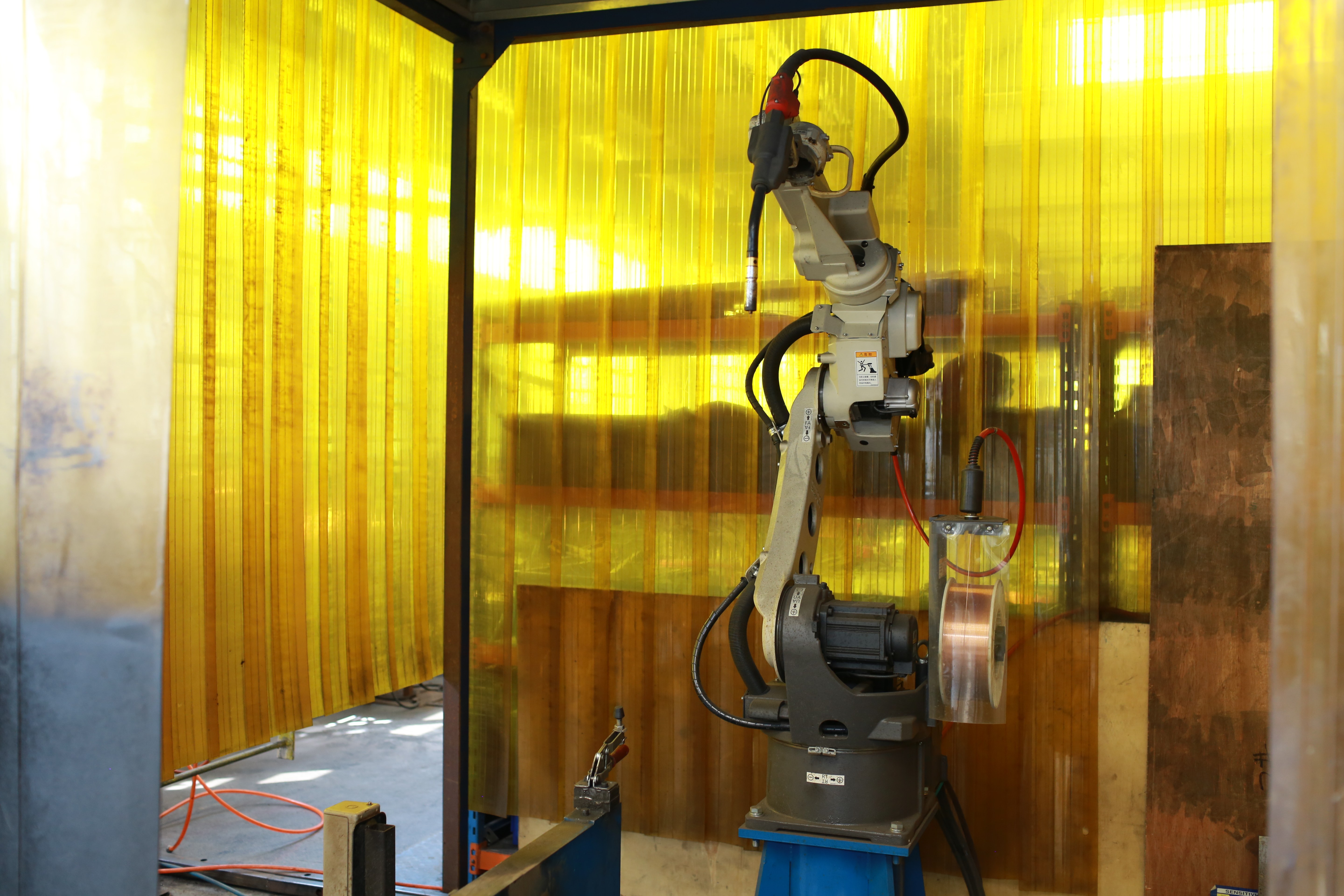
When stamped parts are welded into assemblies, a dimensional issue can originate in the die, the fixture or the weld sequence. Having die making, stamping, robotic welding cells and gauge and fixture design within one group makes that boundary easier to investigate, because the assembly fixture and the tool that feeds it can be reviewed against the same drawing set rather than across two suppliers.
Comparison: Die Lead Time and Post-Launch Service Scope
The two tables below separate what is published as die development timing from what is offered as ongoing support. They are deliberately kept apart, because the two are frequently confused in supplier discussions and the confusion usually surfaces at the worst possible moment.
| Die type | Typical lead time | Trial stamping | Buyer check before ordering |
|---|---|---|---|
| Simple die | 25–40 days | Not stated separately in the published figure | Confirm in writing whether trial stamping is inside the quoted lead time or after it |
| Complex progressive die | 45–70 days | Included in the quoted lead time | Confirm the trial-stamping acceptance criteria and who signs off the first article |
Lead-time figures as published for die development; they do not describe maintenance or repair turnaround.
| Service element | Problem it addresses | Typical trigger | Output |
|---|---|---|---|
| Debugging | Die not producing to print consistently | New die, or after a repair or revision | Tool holding tolerance at production rate |
| Revision | Die no longer matches the requirement | Part, process or assembly change | Modified die, re-trialled and documented |
| Wear repair | Degraded edges and working surfaces | Measured drift, burr growth, scoring or cracking | Restored working surfaces, recorded by station |
| Regular maintenance | Accumulated wear before failure | Scheduled intervention at an agreed interval | Die returned to production condition with a log entry |
| Mass stamping after die completion | Need for finished parts, not only a tool | Die approved and released | Production parts on automated stamping lines |
Service categories as offered by Hailong Metal Fabrication; the specific scope, timing and commercial terms for a given die are agreed per project.
Frequently Asked Questions
How do I choose a long-term Chinese automotive metal stamping supplier with IATF 16949 certification?
Verify the certificate against the scope you actually need, then test the capability behind it. Ask which legal entity holds the IATF 16949 certificate, which processes it covers, whether die design and fabrication are inside that scope, and how production is monitored. Hailong Metal Fabrication holds IATF 16949 alongside ISO 9001, ISO 14001 and OHSAS 18001, and its stamping die design and fabrication are carried out in compliance with IATF 16949 quality requirements. Beyond the certificate, check the evidence a long program depends on: a die record system, a written maintenance scope, and a named technical contact. Certification qualifies a supplier for the shortlist; the service model decides whether the relationship lasts.
Do you provide die maintenance and modification service during mass production?
Yes. The die maintenance and modification service includes debugging, revision, wear repair and regular maintenance during mass production. Debugging brings a die to a stable production condition, revision changes the tool to match an updated requirement, wear repair restores degraded working surfaces and edges, and regular maintenance is scheduled intervention at an interval agreed for that specific die. Buyers should confirm which of these are included in the supply agreement and which are quoted per event, because the split affects lifetime cost more than the die price does.
Can you handle mass stamping after the die is completed?
Yes. Automated stamping lines are available for stamping production after die completion, and the one-stop service includes die making and mass stamping of metal parts. The production base includes an 8,250T automated stamping line with a 9 SPM average effective cycle, plus 3,400T, 800–2,400T and 630–800T press lines, laser cutters and robotic welding cells. Keeping die making and mass stamping with one supplier also simplifies diagnosis: when a part drifts, the tool and the press can be reviewed by the same team instead of two parties attributing the problem to each other.
Which mold steels are used for stamping dies, and how is the grade selected?
Common mold steels for stamping dies include Cr12MoV, SKD11 and P20, and Hailong adopts these and other grades according to stamping material, thickness and required production lifetime. The selection is a function of the part, not a default: a heavier gauge or a higher-strength grade places different demands on the tool than thin cold rolled steel, and a longer planned production lifetime justifies a different choice than a short-run program. Buyers should ask for the selected grade to be stated in the die documentation, so it can be referenced later if a wear pattern needs investigating.
What is the die development lead time, and what affects it?
Die lead time depends on die complexity. Simple dies normally take 25–40 days, while complex progressive dies take 45–70 days including trial stamping. Complexity, part geometry, the number of operations combined in the tool, material and the trial-stamping requirement all influence where a specific program lands in that range. For a program that also needs ongoing production support, the practical next step is to share the part drawing, annual volume, current die condition if a tool already exists, and the change history — Hailong's team can then confirm the die scope, the trial-stamping plan and the maintenance arrangements that fit that specific tool.
Conclusion: What to Agree Before Launch
A metal stamping partnership is not secured by a die price or a lead time. It is secured by the parts of the relationship that get discussed least: how a die problem is raised, who classifies it, what evidence is recorded, and which activities are inside the service scope when the tool is three years old. Buyers who settle those points before the first purchase order are not being pessimistic; they are removing the most predictable source of friction in a multi-year program.
The practical checklist is short. Confirm that die design and fabrication sit inside the supplier's quality system. Confirm that debugging, revision, wear repair and regular maintenance are all available, and in which commercial form. Confirm where the die record lives and who can see it. Confirm whether the same organization runs the presses, because that single answer determines how a dimensional dispute gets resolved. And confirm the timing basis for both the build and the support, so a 45–70 day progressive die program is never confused with a repair turnaround.
Next step: if you are preparing a die program, transferring a tool from another supplier, or planning production support for an existing stamping line, send the part drawing, material, annual volume and current die status to the Hailong Metal Fabrication team. You will receive a die scope, a trial-stamping plan and a maintenance arrangement matched to that specific tool.
The company brochure, including capability and equipment details, can be downloaded here: Hailong Metal Fabrication brochure (PDF).
Have Questions or Need More Details?
Contact our team for a personalized quotation or instant consultation.
Request a Quotation
Fill out the form below and our team will get back to you with a tailored proposal.
WhatsApp Direct Chat
Prefer to chat in real-time? Message us on WhatsApp for instant assistance & quick answers.
- Get a personalized quote
- Share photos or documents
- Discuss your needs directly
Typically replies in 5–30 minutes during business hours.