
Metal Stamping Long-Term Partnership FAQ: Die Wear, Revisions, After-Sales
Short answer: A long-term metal stamping partnership is decided after the die is approved, not before. The four activities that keep a program running — die debugging, revision, wear repair and regular maintenance during mass production — are documented by Hailong Metal Fabrication as part of its mass-production support, alongside one-stop die making and stamping on automated press lines. What the published information does not state is a warranty period, a response time or a service-level commitment. Those are contract terms, and this FAQ keeps them separate from documented capability.
Most supplier comparisons in metal stamping are built around the tool: press tonnage, die steel grade, tolerance and die lead time. Those figures answer one question — whether a supplier can produce a conforming part once. They say much less about the day a die needs work, and in every stamping program that day arrives.
Hailong Metal Fabrication is the brand under which Qingdao Hailong Machinery Technology Co., Ltd. operates. Founded in January 2000 and headquartered in Jimo District, Qingdao, China, the company holds IATF 16949, ISO 9001, ISO 14001 and OHSAS 18001 certification and provides one-stop die making and mass stamping of metal parts, including production on automated stamping lines once a die is complete.
The questions below are written for buyers who have shortlisted a supplier and are now negotiating terms that will govern the next few years. Each answer separates three things: what the supplier documents, what the buyer must verify, and what has to be written into the purchase agreement because published information does not cover it.
Why the partnership is really decided after die approval
Die approval confirms geometry, not continuity. Once a tool enters mass production, three recurring events determine whether the relationship holds.
Wear is a scheduled event, not a defect
Cutting edges dull, form radii change and clearances open as strokes accumulate. The rate depends on the stamped material and gauge, the die steel, the press condition, lubrication and how the tool is maintained. Because wear is predictable in direction but not in timing, the useful question is not whether a supplier offers wear repair. It is how a repair is triggered, who authorises it and what record the buyer receives afterwards.
Revisions usually start on the customer side
Most revisions originate upstream: a geometry change, a hole moved for packaging, a switch from cold rolled steel to stainless, a tolerance tightened after assembly trials. A supplier that machines and debugs its own dies handles these inside one organisation; a supplier that outsources tooling routes them through a third party. Neither arrangement is automatically better, but the buyer should know which one applies before awarding the program.
Technical support is judged during a deviation
The moment that tests a partnership is a quality deviation at the press: parts drifting out of tolerance, a surface mark that appears only at running speed, an assembly that no longer fits. At that point the buyer needs someone who can separate die cause from coil, press or handling cause. Hailong describes its role as a one-stop manufacturing and technical partner covering design consultancy, DFMA optimization, mold manufacture, tryout, mass production and after-sales technical support, which is the right scope for that situation — provided the buyer confirms who performs each part of it.
The decision rule
Treat die service as a described, priced line item rather than as goodwill. If the scope of debugging, revision, wear repair and regular maintenance is not written down, the buyer is relying on a relationship that has not yet been defined.
Industry background: a large market with uneven service depth
Metal stamping is a large, fragmented industry, and published estimates differ enough to warn buyers against treating any single figure as precise. Grand View Research values the global metal stamping market at USD 257.3 billion in 2025, with automotive metal stamping estimated at USD 90.6 billion for the same year. Other research houses publish lower valuations, and the difference is generally attributed to whether stamping departments captive inside large OEMs are counted.
Regional shares carry the same caveat. Grand View Research puts Asia Pacific at 37.0% of 2025 revenue, while another commercial source reports 46% for the region; the gap is attributed to whether captive stamping is included rather than to a disagreement about demand. Read together, the figures describe a market where suppliers are numerous and where certification and documented process separate one bid from another.
One commercial market report on North American automotive steel stamping describes IATF 16949 certification, real-time SPC monitoring and Run@Rate runs of 4,000 defect-free pieces as baseline entry criteria for new OEM programs. A certificate alone does not demonstrate those practices, but the expectation tells the buyer what evidence to request. The same logic applies to die service: ask for the process, not the promise.
What die maintenance and modification service covers
Hailong Metal Fabrication documents four activities under die maintenance and modification during mass production: debugging, revision, wear repair and regular maintenance. The same scope appears in the company's customer-facing material, which matters to a long-term buyer because it makes the service a defined offering rather than an informal favour.
The four activities are not interchangeable. Each answers a different production event, and each needs its own clause in the agreement.
Debugging
Debugging brings a die to a stable production condition after tryout, after a repair, or after a change. For the buyer, the practical gap is the word stable. Confirm which measurements close a debugging round, whose samples are used, and whether the round closes on a single conforming run or on a sustained run at production speed.
Revision
A revision changes the tool rather than restoring it: part geometry, hole position, form depth, or the material gauge the die was built for. Because revision scope scales with the change, the agreement should state how many revision rounds sit inside the tool contract, who approves a change before cutting starts, and which changes are treated as new work. Where the change touches a controlled characteristic, the buyer should also confirm in advance whether PPAP or CAE documentation is required, since special process and certification needs are handled as a separate confirmation rather than as a default.
Wear repair
Wear repair restores cutting edges, form surfaces and clearances after production wear. It is closely tied to die steel choice: Hailong selects grades such as Cr12MoV, SKD11 and P20 according to stamping material, thickness and required production lifetime. That selection logic is the buyer's best predictor of repair frequency, and it is worth asking why a given grade was chosen for a given gauge and volume rather than accepting the grade as a fixed house standard.
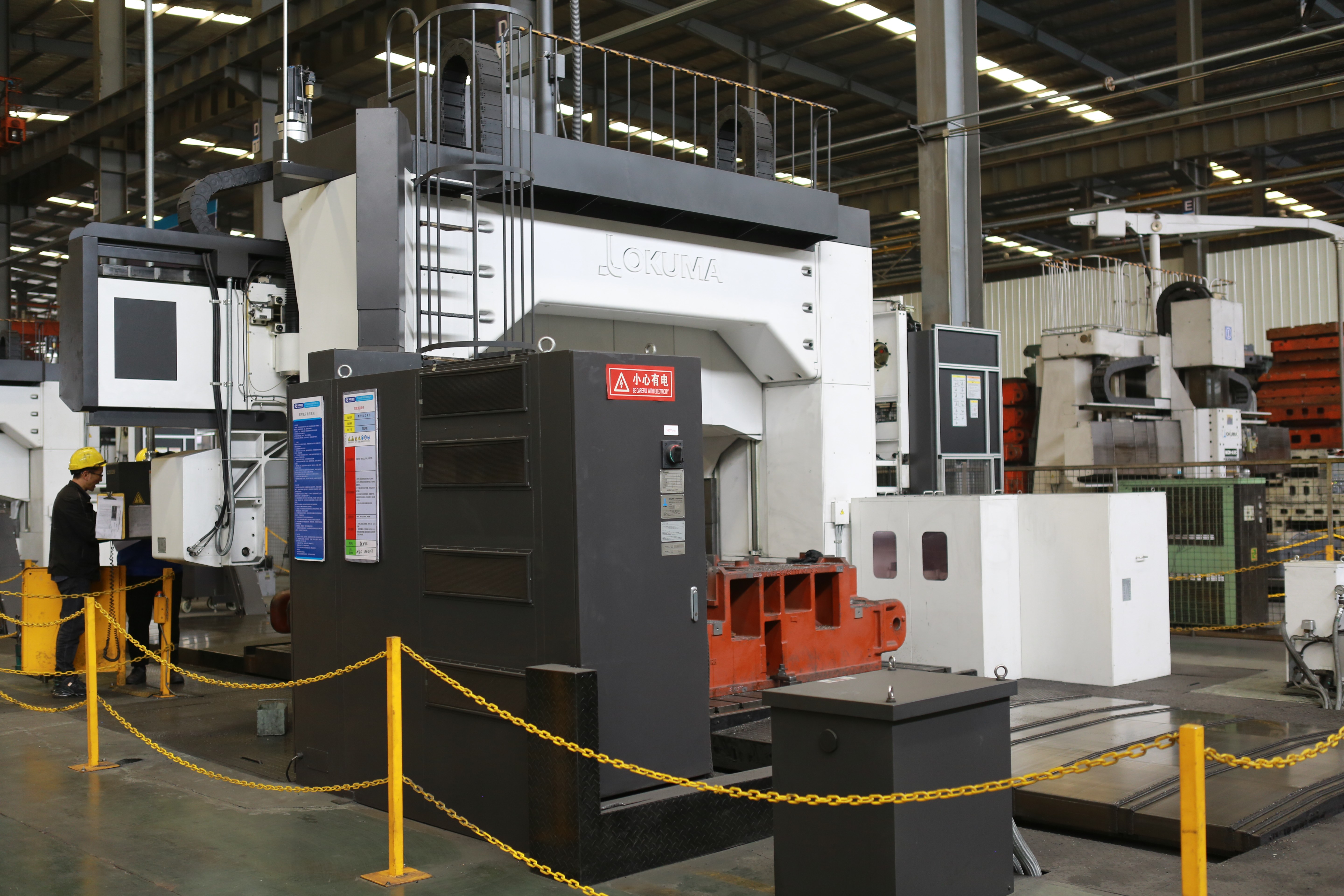
Regular maintenance
Regular maintenance is the planned upkeep that prevents an unplanned stop. The buyer's question is not whether maintenance happens, but on what basis: by stroke count, by calendar interval, by inspection result, and in what record format the outcome reaches the customer's quality file. None of those intervals is published, so they belong in the agreement.
| Service activity | What it addresses in production | What to fix in the agreement |
|---|---|---|
| Debugging | Bringing a die to a stable production condition after tryout or after a change | Definition of closed: which measurements, whose samples, how many rounds |
| Revision | Engineering change to geometry, holes, form or material gauge | Revision scope, approval flow, and which changes count as new work |
| Wear repair | Restoration of cutting edges, form surfaces and clearances | Repair trigger, authorisation route and post-repair verification |
| Regular maintenance | Planned upkeep during mass production | Maintenance basis, record format and access to reports |
Step-by-step: from tooling approval to steady production
The sequence below is the normal path from tooling approval to steady output, with the check a buyer should complete at each stage.
- Die design and fabrication. Hailong has experience in auto sheet metal stamping die design and fabrication, and states that die design and fabrication are compliant with IATF 16949 quality requirements. Buyer check: confirm that the certificate scope covers the site and the process that will actually build your tool.
- Die steel selection. Mold steel is chosen from grades such as Cr12MoV, SKD11 and P20 according to stamping material, thickness and required production lifetime. Buyer check: ask for the selection rationale for your gauge and annual volume, and record it with the tool documentation.
- Trial stamping. Trial stamping sits inside the die lead time: simple dies normally take 25–40 days, while complex progressive dies take 45–70 days including trial stamping. Buyer check: compare quotations on the same basis, because a date that excludes trial stamping is not comparable with one that includes it.
- First-article verification and acceptance. The purchasing terms recorded for this supplier set pre-shipment test as the acceptance criterion. That is a shipment gate, and it only protects the buyer if the measurement items, sample size and method are agreed beforehand. Buyer check: attach the measurement set to the purchase order.
- Ramp-up and debugging. Debugging continues while the press settles and handling is proven. Buyer check: agree the criteria that end ramp-up support, so the transition to routine production is a decision rather than a drift.
- Mass production on automated lines. Automated stamping lines are available for stamping production after die completion, and one-stop service covers both die making and mass stamping of metal parts. Buyer check: confirm which press line will run your part and what happens if volume moves it to another line.
- Wear repair and maintenance loop. Once output is stable, the recurring cycle begins: inspect, repair, verify, record. Buyer check: agree the record format at this stage, not after the first repair.
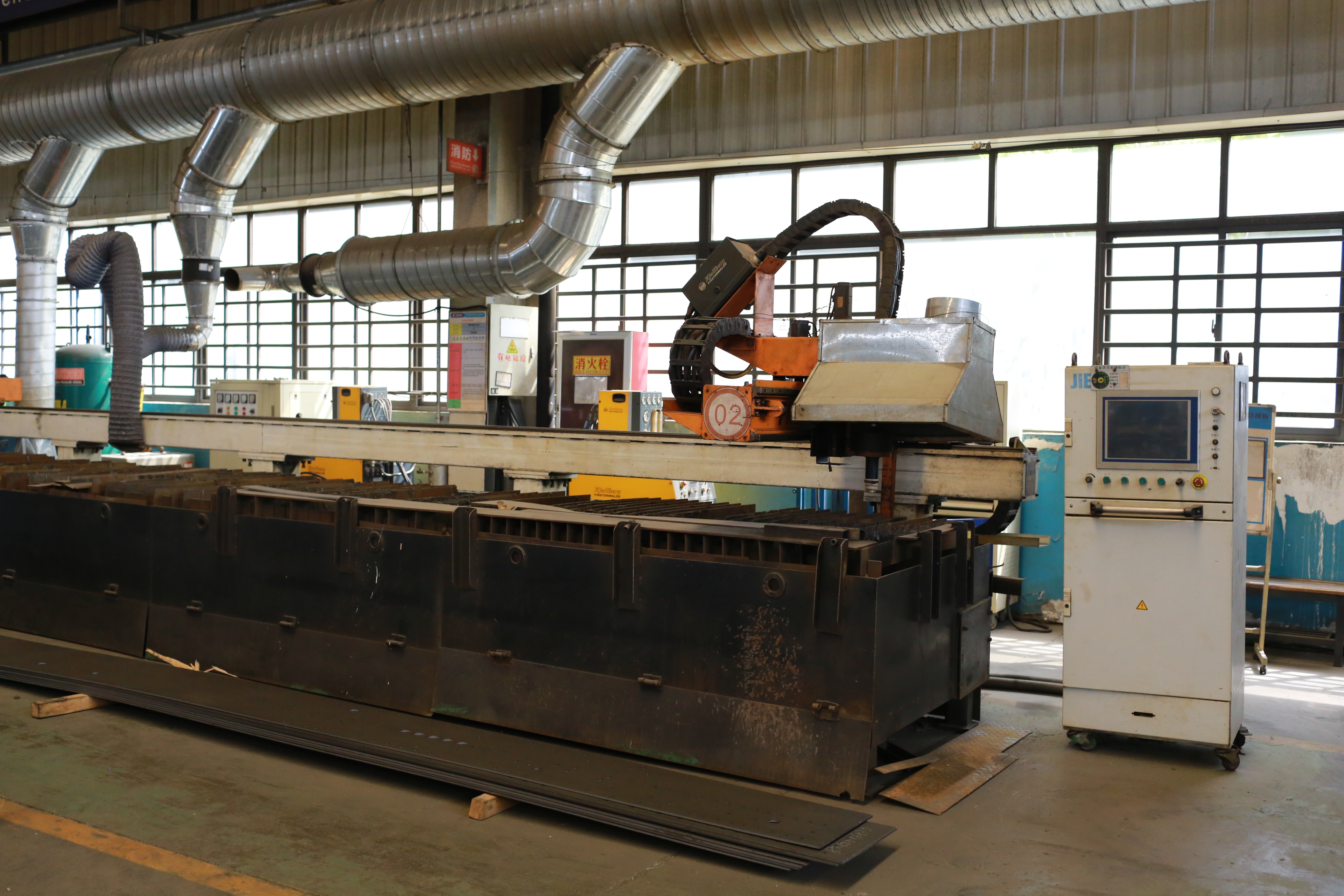
Continuity evidence: one-stop die making plus mass stamping
One-stop service, as documented, covers die making and mass stamping of metal parts, with automated stamping lines available once the die is complete. The company reports five production campuses covering more than 500,000 m² of land and more than 500 sets of precision CNC machining, large-scale stamping and welding equipment. Its Auto Parts Division runs an 8,250T automated stamping line with a 9 SPM average effective cycle, alongside 3,400T, 800T–2,400T and 630T–800T press lines, laser cutters and robotic welding cells.
Die capability is not a single department inside a press shop. Qingdao Jitai Auto Mould Co., Ltd., established in 1993, specialises in cold stamping dies for automotive body panels and is described as a China Key Backbone Die Enterprise. The group's in-house technology centre has held Qingdao Municipal Enterprise Technology Center status since 2008 and holds more than 100 patents, and the engineering team is listed at 28 engineers.
Why does this matter for after-sales? Because the party that repairs the die is also the party that holds the production schedule. When a revision arrives mid-program, the die shop, the press line and the welding cell sit inside one organisation, so the sequence from change request to changed tool to validated part does not need a handover between companies. That is a structural condition, not a guarantee: the buyer still needs revision scope, repair triggers and record formats fixed in writing, and should confirm which site owns each step.
Around 70% of output is exported, with the United States, United Kingdom, Germany, Japan, India, Eastern Europe and African countries listed as main markets. For an overseas buyer, that pattern is relevant when aligning acceptance documentation between a purchasing team and a Chinese production site, because the same records have to be read by both.
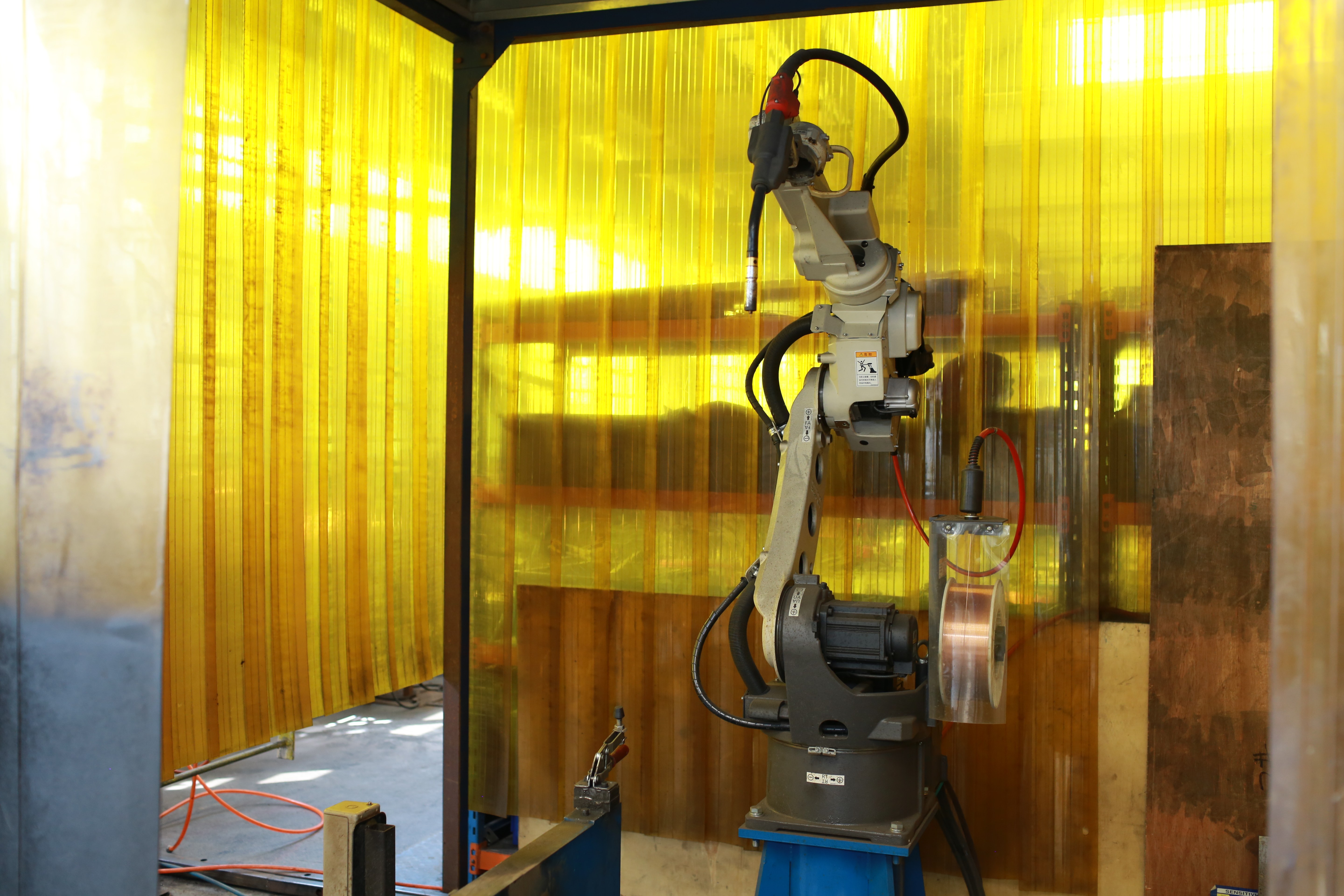
Use cases: where die service demand concentrates
The supplier's documented application scope covers automotive and auto parts, heavy machinery, industrial equipment, household appliances, furniture and architectural components, and oilfield equipment, with production per drawing or sample, tryout and first-article inspection, and small-to-large volume runs. Within that scope, die service demand concentrates differently by part family.
| Part family | Where die service demand concentrates | What to confirm before award |
|---|---|---|
| Progressive die metal stamping for automotive parts | Wear at one station propagates to downstream stations, so a small defect becomes a multi-station correction | Station-level inspection practice and the revision approval flow |
| Deep draw metal stamping | Form radii and surface condition, where material pick-up affects part finish | How form surfaces are restored and polished during repair |
| Heavy-gauge stainless steel stamping | Higher edge loads and work hardening place more demand on cutting edges | The die steel rationale and the trigger that starts a repair |
| Cold rolled steel metal stamping | Routine cutting-edge wear as the dominant maintenance driver | Maintenance basis and how spares or inserts are handled |
| Household appliance metal stamping | Visible surfaces, where handling and surface marks matter as much as dimensional drift | Appearance acceptance criteria and how marks are repaired |
| Stamp-and-weld assembly components | A die revision can change fit-up at the welding cell | Who owns the interface when a revision crosses stamping and welding |
Two limits apply to this table. First, it describes where service demand usually concentrates for each part family; it does not predict a repair frequency for your part. Second, the entry criteria above are buyer checks, not statements about how any specific supplier currently operates.
Purchasing terms and acceptance criteria
Service capability becomes contractual only when it is attached to purchasing terms. The terms recorded for this supplier are short and should be read as a starting point for negotiation rather than as a complete service agreement.
| Purchasing term | Recorded value |
|---|---|
| Minimum order quantity | 5 sets in one record; separate records show 200 kilograms and 10 units for other item categories |
| Delivery terms | FOB / CIF / EXW / CFR |
| Acceptance criteria | Pre-shipment test |
| Payment terms | 30 / 70 |
Minimum order quantities are recorded at item level, so the applicable figure depends on whether the buyer is ordering die sets, stamped material or finished units. Confirm the number for your first order instead of assuming one value covers the whole relationship.
All four delivery terms — FOB, CIF, EXW and CFR — are listed as available, and the choice changes who carries risk in transit. Fix it before the first shipment rather than after a claim. Payment terms of 30/70 define the split between order and shipment, and the acceptance clause is what protects the buyer within that split: a pre-shipment test has value only when the test items, sample size and measurement method are agreed in advance.
Three service topics are not covered by shipping or payment terms at all, and each needs its own clause: die ownership and access, the revision approval flow, and the maintenance record the buyer receives. A fourth, die data and measurement reports, is worth adding if your quality system requires traceability beyond the pre-shipment gate.
What the published information does not cover
The available reference material does not publish a warranty period for dies or stamped parts, a response time for technical support, or a service-level commitment. It also does not publish maintenance intervals or a price schedule for revisions and wear repair. These are contract terms, and they should be agreed explicitly rather than inferred from a supplier's general description of its service.
- Warranty. No warranty duration or coverage for tooling or parts is stated. Ask what is covered, for how long from which event, and what voids it.
- Response and service levels. No response time is published. A buyer who needs one should define it in the agreement, including the escalation route.
- Maintenance interval. No interval in strokes or months is published, and a single number would be misleading anyway: it depends on material, gauge, die steel, press condition and handling.
- Repair and revision pricing. No price schedule is published. Fix which work sits inside the tool contract and how chargeable work is quoted and approved.
- Lead time scope. The quoted 25–40 days for simple dies and 45–70 days for complex progressive dies including trial stamping describe new tooling projects, not maintenance turnaround.
These gaps are not a reason to disqualify a supplier. They are the points where a buyer's own contract discipline does the work, and a supplier that discusses them plainly is easier to write an agreement with than one that answers with adjectives.
FAQ
Long-term Chinese automotive metal stamping supplier with IATF 16949 certification: what should a buyer verify?
Verify four things, in this order. First, that the certificate scope covers the site and the processes that will serve you, including die design and fabrication as well as stamping. Second, that die design and fabrication are carried out to IATF 16949 requirements — Hailong states this for its own die work and holds IATF 16949 among its certifications. Third, that evidence of process control exists beyond the certificate: one commercial market report describes real-time SPC monitoring and Run@Rate runs of 4,000 defect-free pieces as baseline entry criteria for new OEM programs, so ask what monitoring data you will receive. Fourth, that the maintenance and revision scope plus the acceptance criteria are written into the agreement.
What does die maintenance and modification include during mass production?
Hailong documents four activities: debugging, revision, wear repair and regular maintenance during mass production. Debugging brings the tool to stable production after tryout or a change; revision modifies the tool for an engineering change; wear repair restores cutting edges, form surfaces and clearances; regular maintenance is scheduled upkeep. The same description appears in the company's customer-facing material. Because the four are not interchangeable, each needs its own definition of closure, authorisation and record in the purchase agreement.
Who pays for revisions and wear repair?
The published information does not include a price schedule or an inclusion matrix, so there is no factual general answer. What a buyer can do is fix the boundary in the agreement: how many revision rounds sit inside the tool contract, which engineering changes count as new work, what inspection or dimensional result triggers a chargeable repair, and how a repair quotation is approved before work starts. Payment terms recorded for this supplier are 30/70 with pre-shipment test as the acceptance criterion, which governs shipment but says nothing about who bears repair cost.
Can a die be proven before mass production starts?
Yes — trial stamping is part of the die process, and for complex progressive dies it is included within the quoted 45–70 day lead time. Simple dies normally take 25–40 days. What trial stamping proves is that the tool can produce conforming parts under tryout conditions; it does not by itself settle production-volume stability, which is why ramp-up debugging follows. The recorded acceptance criterion for this supplier is a pre-shipment test, so the buyer should attach a defined measurement set and sample size to that test, and confirm separately in advance if PPAP or CAE documentation is required.
How long does die making take, and how does that shape a long-term plan?
Simple dies normally take 25–40 days and complex progressive dies 45–70 days including trial stamping, with the exact figure depending on die complexity. For a long-term program, the practical use of those windows is scheduling: plan revision requests and maintenance work against them rather than assuming a tool can absorb an unplanned change without moving the production date. Buyers who want to test the service path before committing to a multi-year program can request a sample or quotation through the company's contact channels and download the brochure for the full product and service list.
Conclusion
A long-term metal stamping partner is judged on four post-approval activities — debugging, revision, wear repair and regular maintenance — and on whether those activities sit inside the same organisation that runs the press. Hailong Metal Fabrication documents all four, provides one-stop die making and mass stamping of metal parts, and runs automated stamping lines including an 8,250T line with a 9 SPM average effective cycle, supported by die-making depth that includes cold stamping dies for automotive body panels.
What remains open is the commercial frame. No warranty period, response time, service-level commitment, maintenance interval or repair price schedule is published, and the purchasing terms recorded — item-level MOQ, FOB/CIF/EXW/CFR, pre-shipment test, 30/70 payment — cover shipment rather than tooling service. A buyer who writes the missing clauses before the first order gets a partner whose obligations are as clear as its capability. A buyer who does not is depending on a relationship that has not yet been described.
For the full product and service range, download the company brochure: Hailong Metal Fabrication brochure (PDF).
Have Questions or Need More Details?
Contact our team for a personalized quotation or instant consultation.
Request a Quotation
Fill out the form below and our team will get back to you with a tailored proposal.
WhatsApp Direct Chat
Prefer to chat in real-time? Message us on WhatsApp for instant assistance & quick answers.
- Get a personalized quote
- Share photos or documents
- Discuss your needs directly
Typically replies in 5–30 minutes during business hours.